
Top 10 Benefits of Effective Communication

Your HR Director just sent the updated PTO policy to 600 employees. Three weeks later, 40% of them are still following the old rules. Not because they're defiant. Because they never saw the message.
Sounds familiar?
Maybe you're wondering why things keep slipping through the cracks even when everyone's "on the same page." Maybe you're tired of repeating yourself and still not being heard. That kind of disconnect wears teams down over time — not dramatically, but quietly.
But here's the thing: when communication actually works, it changes everything. You get clarity, trust, faster decisions, and a team that genuinely feels connected to the work they're doing.
In this guide, we'll cover:
- Why effective communication matters so much at work
- 10 practical, no-fluff benefits it brings, from boosting productivity to keeping your team sane
- Real-world examples of what good communication actually looks like
Let's dive in.
What Effective Communication Actually Means (and What It Doesn't)
Effective communication isn't just about talking more or writing clearer emails. It's about making sure that what you say is understood, retained, and acted on by the people who need it.
At its core, effective communication means the right message, delivered the right way, at the right time. It involves active listening, shared understanding, and the kind of clarity that leaves no room for guesswork.
That distinction matters because most organizations confuse volume with clarity. They send more emails, schedule more meetings, and pile on Slack channels — then wonder why alignment doesn't improve. A McKinsey report found that improving communication and collaboration can increase team productivity by 20 to 25%. But the gains come from targeted clarity, not increased noise.
So why is it so important in the workplace? Because poor communication is expensive. Think misaligned goals, dropped tasks, passive-aggressive email chains, and meetings that could have been a message. On the flip side, teams that communicate well move faster, trust each other more, and solve problems before they become crises.
Whether you're a manager trying to rally your team, or just tired of the same frustrating missteps, getting communication right is one of the best investments you can make.
Next, let's break down the ten biggest benefits of doing it well.

Turn Communication Into a Business Advantage
- Replace scattered tools and emails
- Keep employees informed in real time
- Ensure messages don’t get missed
10 Benefits of Effective Communication in the Workplace
So what actually changes when communication clicks?
A lot, as it turns out. From how teams collaborate to how leaders lead, the ripple effect is huge. Here are ten benefits that show just how much communication shapes your workplace — and ones you'll probably recognize from your own experience.
#1. It Builds Trust and Transparency
Trust doesn't come from team lunches. It comes from clear, consistent communication over time.
When people know what's going on, what's expected of them, and why decisions were made, they stop second-guessing. They stop filling silence with speculation. Good communication clears the fog. It signals: "We're in this together. No surprises." Over time, that becomes the foundation of a team that actually trusts each other.
(Willis) Towers Watson research found that companies with highly effective communication practices deliver 47% higher total returns to shareholders over a five-year period. That's not a soft metric. That's trust showing up directly in financial results. For HR teams, the practical takeaway is simple: ensure critical updates actually reach everyone, not just the 40% who check their inbox.
#2. It Reduces Conflicts and Misunderstandings
Most workplace conflicts don't start with bad intent. They start with bad assumptions.
A missed email, a vague message, or silence where there should have been feedback. Effective communication gets ahead of conflict by providing context, setting clear expectations, and creating space for honest dialogue before resentment has a chance to build. When people know why a decision was made — not just what the decision is — resistance drops significantly.
When people talk openly and often, there's less room for resentment to grow in the shadows. Problems get named early, when they're still small. And when conflicts do arise, teams with strong communication habits resolve them faster because the foundation of openness already exists.
#3. It Improves Team Collaboration
You can't collaborate if you don't communicate. That sounds obvious until you watch a cross-functional project stall because two departments were working from different assumptions for three weeks.
The best teams bounce ideas, clarify responsibilities, and adjust in real time. They don't just share information, they share context: what's done, what's blocked, what changed, and what's needed. That requires shared language, established cadences, and channels where the right people see the right updates at the right time.
HR Cloud's internal communication platform enables this through department-specific channels, team feeds, and a mobile app that keeps remote and frontline workers in the same information loop as office-based teams. Effective communication is the glue that holds good work together.
#4. It Boosts Employee Engagement
When people feel heard, they lean in. When they're kept in the loop, they care more. When they understand how their work connects to a larger purpose, they bring more energy to it. It's that simple.
Gallup's research consistently shows that engagement is driven by a few core needs: clarity about expectations, feeling cared about, and having opinions that count. Every single one of those is a communication outcome.
Yet only 46% of workers believe they receive open and honest communication from leadership. Those who do are 12 times more likely to be engaged and motivated. That gap represents a massive opportunity for organizations that get communication right. That sense of purpose is rocket fuel for engagement — and without it, even the most capable people eventually check out.
For deeper strategies on this, see our guide on 15 proven employee engagement strategies.
#5. It Enhances Productivity (and the Data Is Specific)
Miscommunication slows everything down. Rework, back-and-forth clarification, chasing updates, meetings that exist only because the original message wasn't clear. It's a productivity tax that most organizations don't even realize they're paying.
Grammarly's 2025 Productivity Shift report found that effective communication can save workers up to 25 hours per week.
McKinsey puts the productivity gain from improved communication at 20 to 25%.
These aren't marginal improvements. They're the difference between a team that hits deadlines and one that's always catching up.
Clear, consistent communication gives people what they need to act fast and decisively. No guessing. No waiting. And when expectations are understood upfront, fewer balls get dropped. You simply get more done with less chaos.
Building a communication strategy that standardizes how your team shares updates and escalates issues removes the guesswork that kills velocity.
#6. It Strengthens Manager-Employee Relationships
The best managers aren't mind readers, and neither are employees. Regular, two-way communication builds that bridge.
Gallup's 2025 workplace research revealed a striking disconnect: 50% of managers say they give feedback to their reports every week, but only 20% of those reports agree. That perception gap means managers think the relationship is stronger than it actually is. And by the time they realize it isn't, the employee is already disengaged — or gone.
For employees, regular check-ins are a chance to ask, challenge, and grow. That mutual visibility is what turns a "boss-employee" dynamic into a real working relationship — one where people feel supported rather than surveilled, and coached rather than controlled.
#7. It Fuels Innovation and Problem Solving
Ideas don't form in silence. Innovation thrives when people feel safe sharing half-formed thoughts, challenging assumptions, and surfacing problems early — before they compound.
Teams that talk well solve faster because they crowdsource better answers by drawing on diverse perspectives. When you make it easy for people to share what they see, you multiply the organization's problem-solving capacity. HR Cloud's survey and polling tools give teams a structured way to collect ideas and gather feedback that might never surface in a formal meeting.
That only happens when communication is open, nonjudgmental, and frequent. It's not about brainstorming sessions or innovation labs — it's about making everyday conversation safe enough for honesty.
#8. It Elevates Customer Satisfaction
Behind every great customer experience is a well-aligned internal team.
When internal communication is tight, service gets smoother. Sales and support share context. Marketing and product stay aligned. Customers get consistent answers, and nobody has to explain their problem three times. When internal communication breaks down, customers feel it — conflicting information, slower responses, and the distinct sense that the left hand doesn't know what the right hand is doing.
For organizations with multi-site or multi-shift operations, this alignment depends on communication infrastructure that works across locations and schedules. Digital signage in warehouses, retail floors, and clinics keeps frontline teams updated on the same information that office teams see in their inboxes.
#9. It Improves Mental Health and Morale
Silence breeds anxiety. Vague updates fuel overthinking.
When communication is poor, people assume the worst. They wonder if their job is safe, whether the project is on track, or what leadership is really thinking. That low-grade uncertainty drains morale over time — and it shows up in absenteeism, disengagement, and turnover before anyone even notices.
Clear, compassionate communication reduces that uncertainty. It makes space for emotional check-ins, not just task updates. And during high-stakes moments — layoffs, reorganizations, crises — the quality of communication determines whether your team trusts you through the difficulty or starts quietly updating their resumes.
HR Cloud's crisis communication tools enable instant, confirmed outreach to every employee during urgent situations, so nobody is left in the dark when it matters most.
#10. It Supports Career Growth and Success
Want to grow in your career? You need to communicate well. Full stop.
It's how you demonstrate leadership, earn trust, and build influence. Whether you're presenting ideas, giving feedback, or navigating a tough conversation, good communication is what separates people who move forward from those who stay stuck.
For organizations, investing in better communication practices isn't just about operational efficiency. It's about developing your people and building a culture where clear, honest communication is simply how things work.

Make Internal Communication Actually Work
- Share updates in one trusted place
- Encourage two-way employee engagement
- Improve clarity without extra meetings
The Communication Gap Nobody Talks About: Frontline and Deskless Workers
Here's where most communication platforms stop. They assume everyone sits at a desk with email and Slack open. But 80% of the global workforce is deskless — nurses, construction workers, manufacturing staff, retail associates, field crews.
These employees are the hardest to reach and the most affected when communication fails.
A policy change that never reaches the floor.
A safety protocol that was emailed but never seen.
An engagement initiative that only touches the corporate office.
The benefits of effective communication only materialize when communication actually reaches everyone — not just the employees who happen to sit near a computer.
HR Cloud's mobile-first approach was adopted to fulfill exactly this gap: company announcements, peer recognition, team conversations, and onboarding information accessible from any phone, any shift, any location.
Organizations like Orlando Health, Osmose Utilities, and Dutch Bros Coffee use this approach to ensure their deskless workforce gets the same communication quality as their corporate teams. The engagement lift is measurable because for the first time, these employees are actually included in the conversation.
Real-World Example: Communication in Action
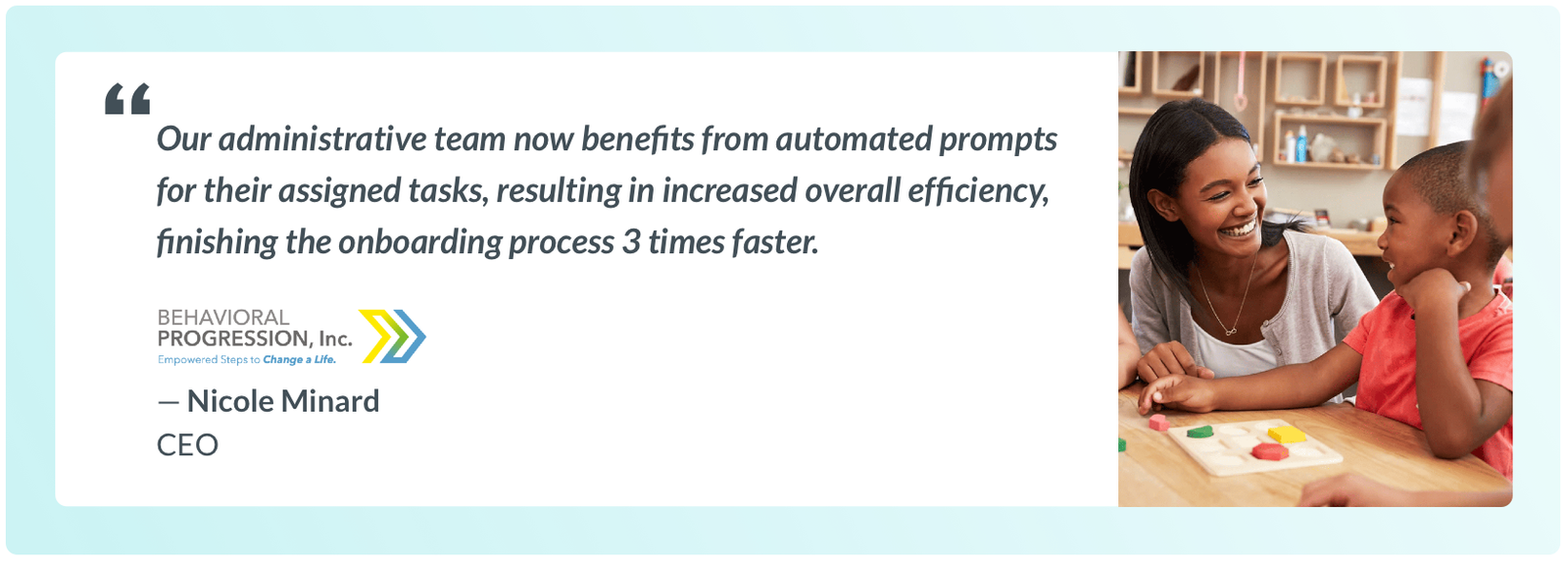
When Behavioral Progression, a behavioral health company, relied on Word docs and Google Drive for onboarding, things fell apart quickly. New hires kept asking the same questions. HR was drowning in duplicate work. The whole process felt chaotic.
Then they introduced structured, consistent communication using HR Cloud's onboarding software.
The result? A 60% drop in procedural questions and onboarding time cut nearly in half. New hires felt more confident from day one. HR finally had breathing room. The team started running smoother almost immediately.
Clear communication wasn't just a "nice to have." It changed how the entire business worked.
How to Start Getting These Benefits
Fixing communication doesn't mean adding more Zoom calls. It means being intentional about how and where information flows. You don't need to overhaul everything overnight — just start with the highest-impact changes.
Here are some practical, low-effort ways to make a real difference:
- Audit your reach. What percentage of your workforce actually sees your most important messages? If you don't know, that's your first problem to solve.
- Match the channel to the message. Urgent safety update? Push notification, not email. Weekly team update? Async post, not a 30-minute meeting. Performance feedback? Face-to-face or video, never buried in a group chat.
- Ask for feedback — and actually use it. Communication is a loop, not a broadcast. Build in mechanisms for employees to respond, ask questions, and share what they're experiencing. Employee surveys and anonymous pulse checks surface the things people won't say in meetings.
- Close the loop. When you ask for feedback, report back on what happened. "We heard X, we're doing Y, we decided against Z because of this reason." Nothing kills communication culture faster than a suggestion box that goes into a void.
- Model it from the top. If leadership isn't clear, open, and consistent, no one else will be either.
You don't need fancy frameworks to get this right. Just better habits, shared language, and a genuine commitment to keeping people in the loop.
For a step-by-step framework, see our complete guide to creating an employee communication strategy.
Effective communication at scale requires more than good intentions. It requires the right channels, the right cadence, and confirmation that every employee is in the loop. See how HR Cloud helps organizations connect every team member — from the C-suite to the frontline. Book a Free Demo

See How Modern Teams Communicate Better
- Support onboarding, updates, and recognition
- Align teams as you scale
- Trusted by HR leaders worldwide
Frequently Asked Questions
What are the top benefits of effective communication?
Effective communication builds trust, reduces misunderstandings, boosts productivity, improves team collaboration, and supports better mental health at work. Companies with highly effective communication practices also deliver 47% higher total returns to shareholders over five years, according to Towers Watson research — making it as much a business imperative as a people one.
Why is effective communication important at work?
Because nearly every workplace problem — from missed deadlines to high turnover — has a communication failure at its root. When employees understand their roles, goals, and responsibilities, they move faster, make fewer errors, and stay longer. Gallup's research shows that 70% of team engagement variance comes down to the manager — and management quality is largely a communication outcome.
What does effective communication look like?
It involves clear messaging (specific, relevant, free of ambiguity), active listening (confirming understanding, not just broadcasting), timely feedback (weekly, not annually), and channel discipline — matching the urgency and audience to the right medium. Most importantly, it's two-way: employees have structured opportunities to respond, question, and contribute.
How can poor communication hurt my team?
Poor communication leads to confusion, duplicated work, low morale, and missed deadlines. Over time, it erodes trust and directly increases turnover. According to Gallup, organizations with disengaged employees — often a result of poor communication — lose hundreds of billions in productivity annually.
How do I improve communication with frontline or deskless workers?
Email and Slack simply don't reach employees who aren't at desks. You need mobile-first communication channels that meet people where they work — on their phones, from any shift or any location. Pair this with digital signage in common areas for high-visibility updates that don't depend on anyone checking an inbox.
How do I start improving communication today?
Start by setting clear expectations, choosing the right channels for each message, and encouraging two-way feedback. Then model open communication from leadership — because culture flows from the top. Get started here: Complete Guide to Creating an Employee Communication Strategy.
About the author



Like What You Hear?
We’d love to chat with you more about how HR Cloud® can support your business’s HR needs.
Book Your Free Demo