
Top Employee Burnout Symptoms and How to Prevent Them

Understanding the Burnout Crisis
Employee burnout is reaching critical levels across American workplaces. Research from Paychex reveals that 60% of HR leaders are deeply concerned about workforce burnout, with 40% of employees reporting stress, mental health challenges, and declining performance. This is not just about tired employees — it is a workforce crisis that costs organizations 15-20% of total payroll in voluntary turnover annually, according to Gallup research on the cost of disengagement.
The World Health Organization officially classified occupational burnout in 2019 as a workplace phenomenon stemming from chronic stress that has not been successfully managed. Understanding burnout symptoms and implementing effective prevention strategies is no longer optional — it is essential for organizational survival.
Meet Greg, one of your company's top performers. He consistently arrives early, works late, and responds to emails over the weekend. Greg seems like the perfect employee, right? Maybe not.
While dedication drives business success, there is a dangerous line between engagement and exhaustion. Without proper boundaries and support systems, even your best people like Greg can reach a breaking point and experience severe staff burnout.
What is Employee Burnout?
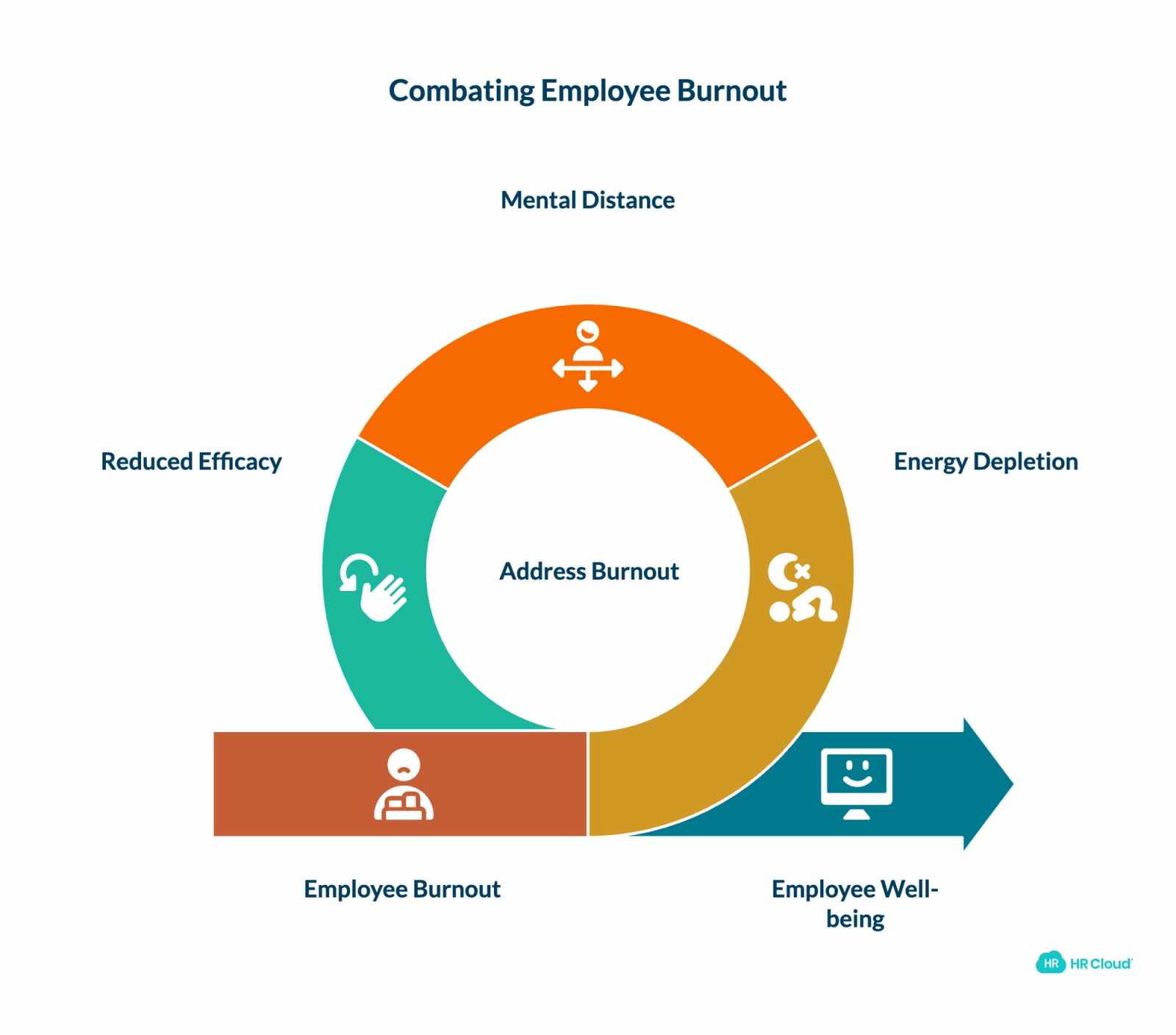
Job burnout goes far beyond typical work stress. According to the WHO's ICD-11 classification, it is characterized by three core dimensions:
1. Feelings of energy depletion or exhaustion - chronic fatigue that rest doesn't resolve
2. Increased mental distance from one's job - cynicism, negativity, or feeling emotionally numb about work
3. Reduced professional efficacy - doubting your abilities and feeling ineffective despite effort
While workplace burnout is officially recognized as an occupational phenomenon, it is not classified as a medical condition. However, the symptoms can be severe enough to require professional intervention and significantly impact both employee wellbeing and organizational performance.
Prolonged work-related stress creates a state of complete mental and emotional exhaustion, loss of purpose, and an overwhelming feeling of emptiness. Unlike temporary stress that resolves after a deadline, burnout represents a fundamental breakdown in the employee-work relationship.
Critically, stress and burnout are not the same thing. Stress is characterized by overengagement — too much pressure but still some motivation and investment. Burnout is the opposite: disengagement, emptiness, and the sense that nothing you do matters. This distinction shapes how HR leaders should respond to each situation.
The Four Stages of Burnout
Burnout rarely appears overnight. Understanding its progression helps managers catch it before it becomes irreversible. Research from Indeed identifies four recognizable stages:
1. Normal job stress: Employees experience routine work-related pressure — short bursts of stress that are manageable with normal coping mechanisms. Performance remains consistent.
2. Onset of stress symptoms: Stress becomes more frequent. Employees experience anxiety, fatigue, headaches, or an inability to focus on a regular basis. Optimism starts to decline.
3. Chronic job stress: Stress is daily and harder to manage. Productivity begins to suffer visibly. Early behavioral changes emerge — missed deadlines, withdrawal from colleagues.
4. Burnout: Symptoms become severe and unmanageable. Behavioral withdrawal, active job searching, and complete disengagement set in. At this stage, intervention without systemic change rarely works.
Knowing which stage an employee is in shapes the appropriate response. Stage 2 is where manager conversation and workload adjustment can reverse the trajectory. By Stage 4, the conversation is more complex and often requires professional support resources.
The Signs of Employee Burnout
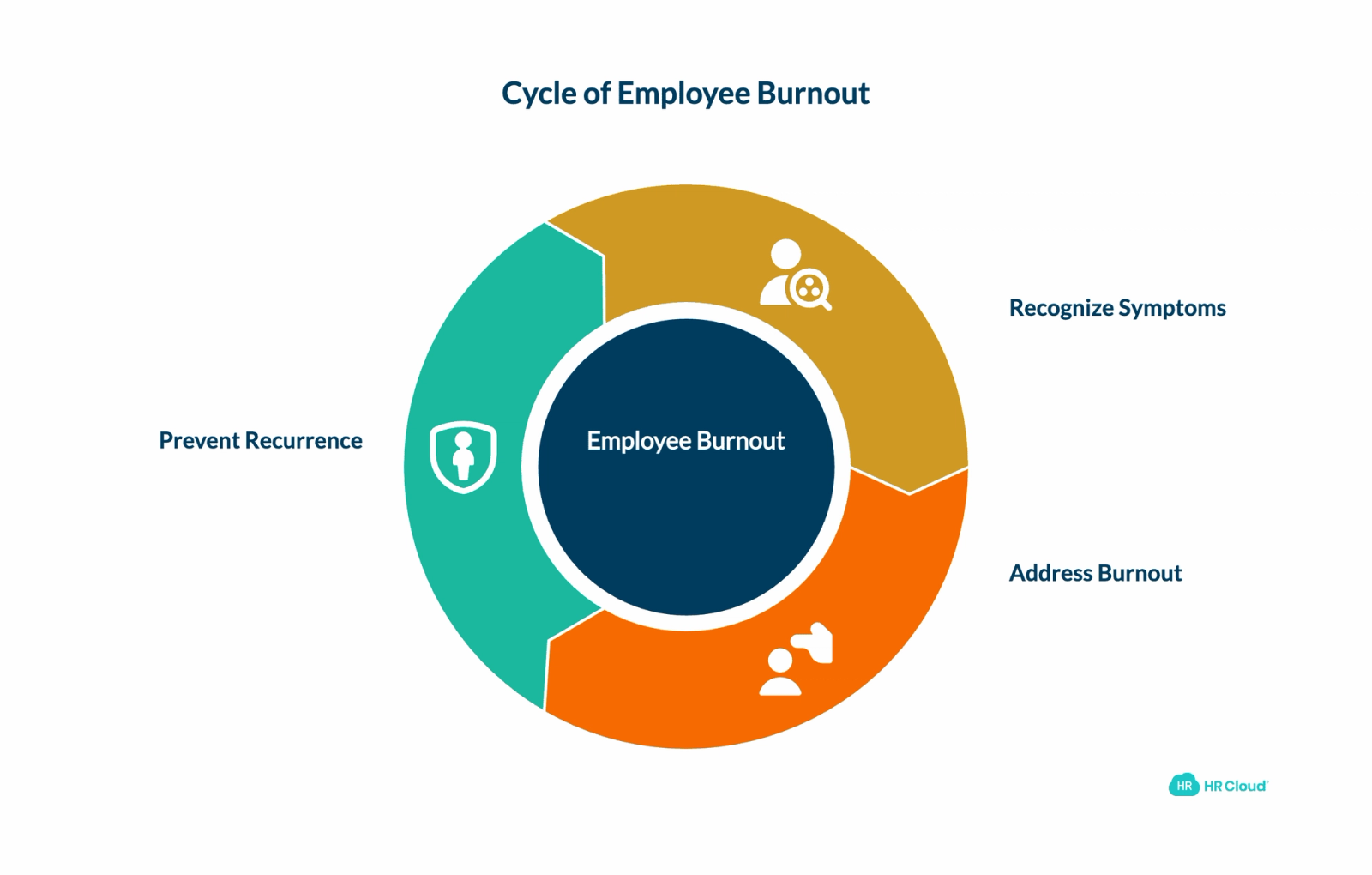
Being able to recognize burnout symptoms early — both in the employees you manage and in yourself — is essential to maintaining a healthy and productive work environment. Gallup's burnout research identifies five key factors that correlate most highly with employee burnout, and understanding the warning signs can help you intervene before it becomes a crisis.
APA's 2024 Work in America survey found that emotional exhaustion affected 25% of workers in the preceding month — a figure that points to systemic, not individual, causes.
Physical and Mental Exhaustion
Chronic fatigue and depression: If you or anyone on your team consistently feels a lack of energy, experiences complete mental exhaustion, or exhibits feelings of sadness and diminished self-esteem, burnout may be the underlying cause. This is not the kind of tiredness that improves after a good night's sleep — it is a persistent, deep exhaustion that affects every aspect of work and life.
Lyra Health research shows that employees locked in an "always on" state struggle to relax, sleep well, and maintain the energy needed to get through the workday. Physical symptoms can include headaches, chest pains, increased heart rate, nausea, and appetite changes. HR Cloud's Time Off tracking helps managers identify patterns of unused vacation time — often an early warning sign that employees are not taking necessary recovery breaks.
Behavioral Changes and Disengagement
Detachment and lack of focus: Employees experiencing occupational burnout begin to isolate themselves, exhibit an inability to concentrate even for short periods, or start neglecting duties entirely. According to research highlighted by WellRight, this often manifests as:
- Losing interest in previously enjoyable activities like socializing with colleagues
- Stopping participation in meetings or avoiding new projects
- Failing to return calls, messages, and emails promptly
- Diminished motivation to grow in their roles
This depersonalization at work represents a psychological withdrawal — employees create emotional distance as a coping mechanism when they feel overwhelmed. Workmates engagement platform provides visibility into participation patterns, helping managers spot concerning drops in communication and collaboration before they escalate.

Emotional Volatility
Unprovoked irritability and cynicism: Consistent irritability is another possible sign of employee burnout and can escalate into full outbursts if not handled appropriately. Gallup's burnout research identifies "unfair treatment at work" as the single strongest predictor of burnout — when employees perceive bias, favoritism, or inconsistently applied policies, frustration compounds rapidly.
Employees may become highly critical of their working conditions or colleagues, express feelings that their work does not matter, or demonstrate a "what's the point?" attitude. This cynicism often stems from feeling unable to make a meaningful impact despite their best efforts.
It is important to note that just because an employee exhibits some of these behaviors does not automatically mean they are suffering from burnout. Personal circumstances, temporary challenges, or other health conditions can produce similar symptoms. However, when you notice these patterns — especially in combination — an investigation into the situation is absolutely warranted.
Who Is Most at Risk for Workplace Burnout?
Burnout does not affect every employee equally. Wellhub's 2026 State of Work-Life Wellness report shows that Gen Z (68%) and Millennials (61%) experience burnout at significantly higher rates than Gen X (47%) or Boomers (30%). Younger employees are 10 percentage points more likely than those 50 and older to feel stressed often or always.
Beyond generational lines, certain roles and environments carry elevated risk. Project managers, nurses, teachers, and IT professionals face some of the highest burnout rates across industries. Employees in toxic workplace cultures are eight times more likely to experience burnout than those in supportive environments. Women face additional pressure, with many managing substantially more caregiving responsibilities outside of work than male counterparts in equivalent roles.
For HR leaders managing distributed, multi-location, or frontline teams, burnout risk intensifies further. Deskless workers often lack access to the same wellbeing resources available to office-based employees, and their burnout signals are harder to detect without the right tools. HR Cloud's employee engagement software is built to support exactly these distributed teams — providing visibility and connection channels for employees regardless of where they work.
Preventing Employee Burnout: Evidence-Based Strategies
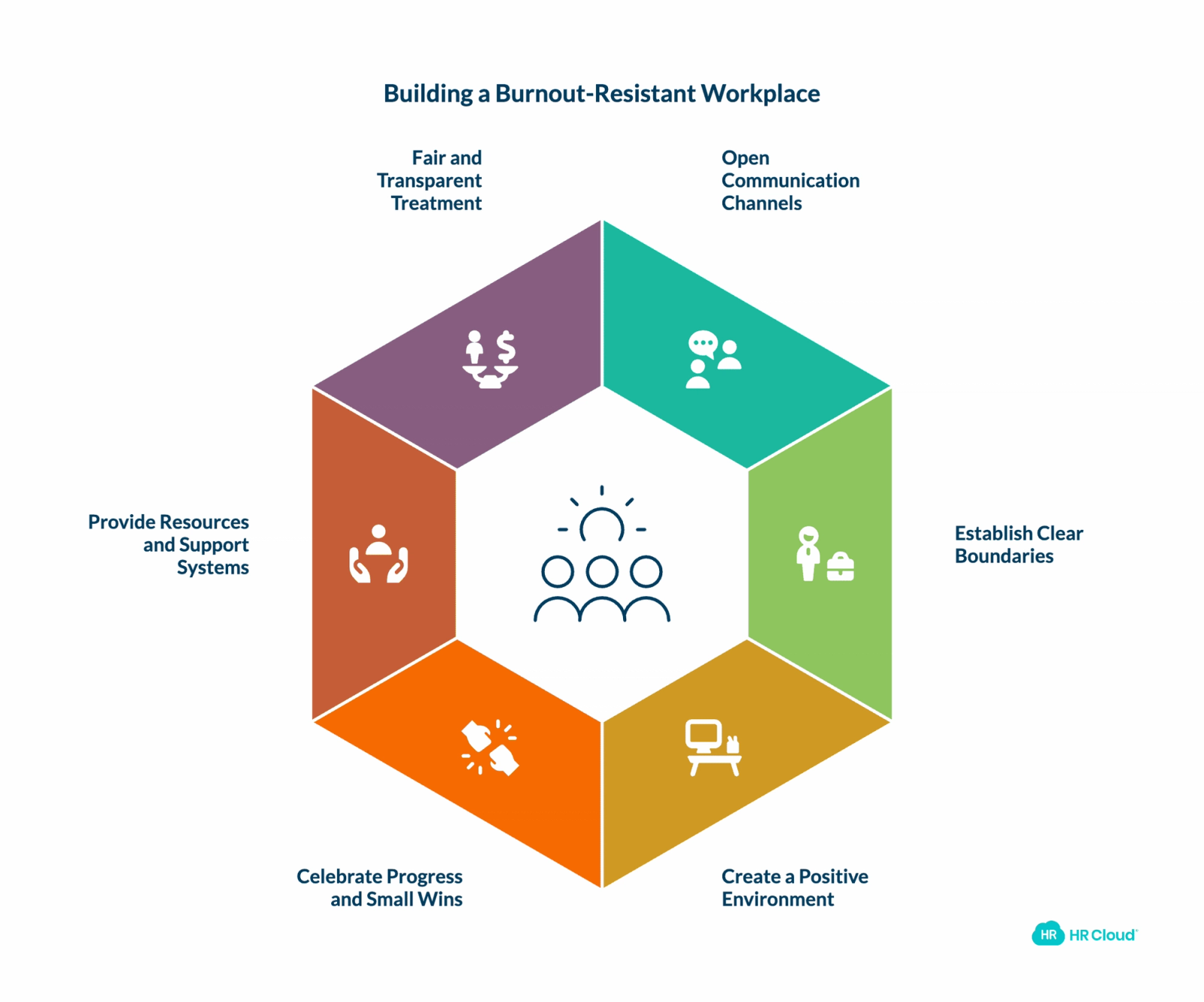
The good news? Research consistently shows that manager actions and organizational culture play the most significant roles in either causing or preventing burnout. Here is how to build a burnout-resistant workplace:
1. Open Communication Channels
The first step in fighting burnout in the workplace is opening genuine lines of communication between employees and management. What matters most is that employees feel psychologically safe enough to have honest discussions about workload challenges, resource needs, and personal capacity without fear of judgment or retaliation.
Gallup's burnout research demonstrates that supportive managers provide a critical psychological buffer — employees who know their manager has their back experience significantly lower burnout rates even when challenges arise. Great managers proactively share information, ask questions, and genuinely encourage team members to voice concerns.
Workmates communication tools enable ongoing dialogue through multiple channels — from private messages to team discussions to anonymous pulse surveys through HR Cloud's employee engagement survey platform. When employees have accessible, varied ways to communicate, they are far more likely to speak up before problems reach crisis levels.
2. Establish Clear Boundaries
Management teams must recognize that there are only so many productive work hours in a day. According to Indeed's research, consistently demanding more time from employees is both unfair and ultimately counterproductive to business goals. Unreasonable deadlines and pressure create a snowball effect where missing one aggressive deadline causes employees to fall further behind on subsequent work.
Gallup analytics also show that burnout risk increases substantially when employees regularly exceed 50 hours per week and escalates even more sharply at 60 hours. The number of hours matters, but how employees experience their workload matters even more. A person overwhelmed by complexity can burn out working 40 hours just as easily as one working 60.
Workload management requires regular assessment of individual capacity, clear expectations about after-hours availability, actual enforcement of vacation policies — not just offering unlimited PTO that no one takes — and recognition that different individuals handle time pressure differently.
HR Cloud's automated time-off tracking ensures boundaries are not just talked about — they are systematically monitored and enforced.
3. Create a Positive Environment
Does your team genuinely look forward to coming to work? If your organization is conscious of the environment it creates and actively works to improve it, the answer should be yes.
Research from Gallup and Bersin by Deloitte consistently shows that organizations with structured recognition programs experience substantially lower voluntary turnover — with top-quartile recognition cultures seeing 18-43% lower turnover compared to bottom-quartile organizations. Recognition directly addresses one of Gallup's core burnout causes: employees who feel unappreciated are far more likely to experience emotional exhaustion.
Environmental factors that reduce burnout include ensuring all employees feel genuinely appreciated for their contributions — not just top performers — fostering creativity and psychological safety in problem-solving, creating opportunities for social connection and fun, providing clear paths for career development and growth, and maintaining fairness in workload distribution and advancement opportunities.
Workmates recognition platform makes appreciation systematic rather than sporadic. With peer-to-peer kudos, customizable badges aligned to company values, and rewards redemption, recognition becomes woven into daily workflow rather than reserved for annual reviews.
4. Celebrate Progress and Small Wins
It is remarkably easy to feel burnt out when it seems like you are never getting closer to your goals. Celebrating incremental progress combats the "reduced professional efficacy" dimension of burnout — it reminds employees that their work matters and produces tangible results.
You may not have reached your ultimate objective yet, but acknowledging the steps taken builds momentum and reinforces that effort leads to progress. This is particularly crucial for long-term projects where months can pass without visible "completion" moments.
Recognize specific achievements publicly rather than with generic praise. Tie recognition to organizational values and strategic objectives. Include both individual accomplishments and team collaboration wins, and make celebration frequent and varied rather than annual and formulaic.
Workmates analytics dashboard reveals recognition patterns across departments and locations, helping leaders identify where appreciation gaps exist and which teams need more visible acknowledgment of their contributions.
5. Provide Resources and Support Systems
Paychex recommends that organizations implement employee assistance programs (EAPs) offering confidential support including mental health counseling, financial guidance, and lifestyle coaching. While wellness programs focusing solely on physical fitness help, they do not address the root organizational causes of burnout.
Effective support includes access to mental health professionals when needed, manager training on recognizing burnout signs and having supportive conversations, learning and development opportunities that build emotional intelligence and stress management skills, and regular workload assessments with the genuine ability to say no to additional work without penalty.
Quantum Workplace's burnout research identifies insufficient training as the leading organizational cause of burnout — employees who feel unprepared for their roles become overwhelmed faster. Connecting development opportunities to HR Cloud's performance management platform closes this gap by aligning growth plans to individual needs.
When employee wellbeing becomes an authentic organizational priority rather than an HR checkbox, burnout rates drop substantially.
“The platform connects associates to each other in a way that doesn’t happen through email.”
— Gail Gust, Director of Marketing and Business Development

6. Fair and Transparent Treatment
Gallup's burnout research identifies unfair treatment as the strongest burnout predictor. This encompasses bias, favoritism, mistreatment by colleagues, and inconsistently applied compensation or policies. When employees perceive that hard work is not recognized fairly or that advancement depends on factors beyond performance, cynicism grows rapidly.
Burnout prevention requires transparent performance evaluation criteria, consistent application of policies across all employee levels, clear advancement paths based on objective metrics, regular equity reviews to identify and address systemic patterns, and anonymous feedback mechanisms to surface fairness concerns.
HR Cloud's People HRIS centralizes employee data, making it easier to identify compensation disparities, advancement patterns, and recognition distribution — all critical for ensuring equitable treatment across your organization.
When Burnout Has Already Set In: A Manager's Quick Guide
Prevention is always preferable to recovery. But when an employee has reached Stage 3 or Stage 4 burnout, prevention strategies alone are not enough. Here is what managers should do immediately:
1. Have a direct, private conversation. Do not wait for a performance review. Address what you are observing with specific examples and genuine concern, not judgment.
2. Reduce workload temporarily. Remove or defer non-essential responsibilities. This is triage, not a permanent accommodation.
3. Connect them to EAP resources. Most employees do not know what support is available. Make the referral explicit and remove any stigma around using it.
4. Adjust check-in frequency. Brief, supportive check-ins — 10 to 15 minutes, two to three times per week — help without adding pressure.
5. Do not offer only individual solutions to organizational problems. If workload is unreasonable across a team, addressing one person's situation without fixing the system creates a revolving door.
The goal is not to make the employee feel managed — it is to make them feel seen. McKinsey research consistently shows that systemic interventions, not individual wellness programs alone, have lasting impact on burnout recovery.
Special Considerations for Remote and Hybrid Teams
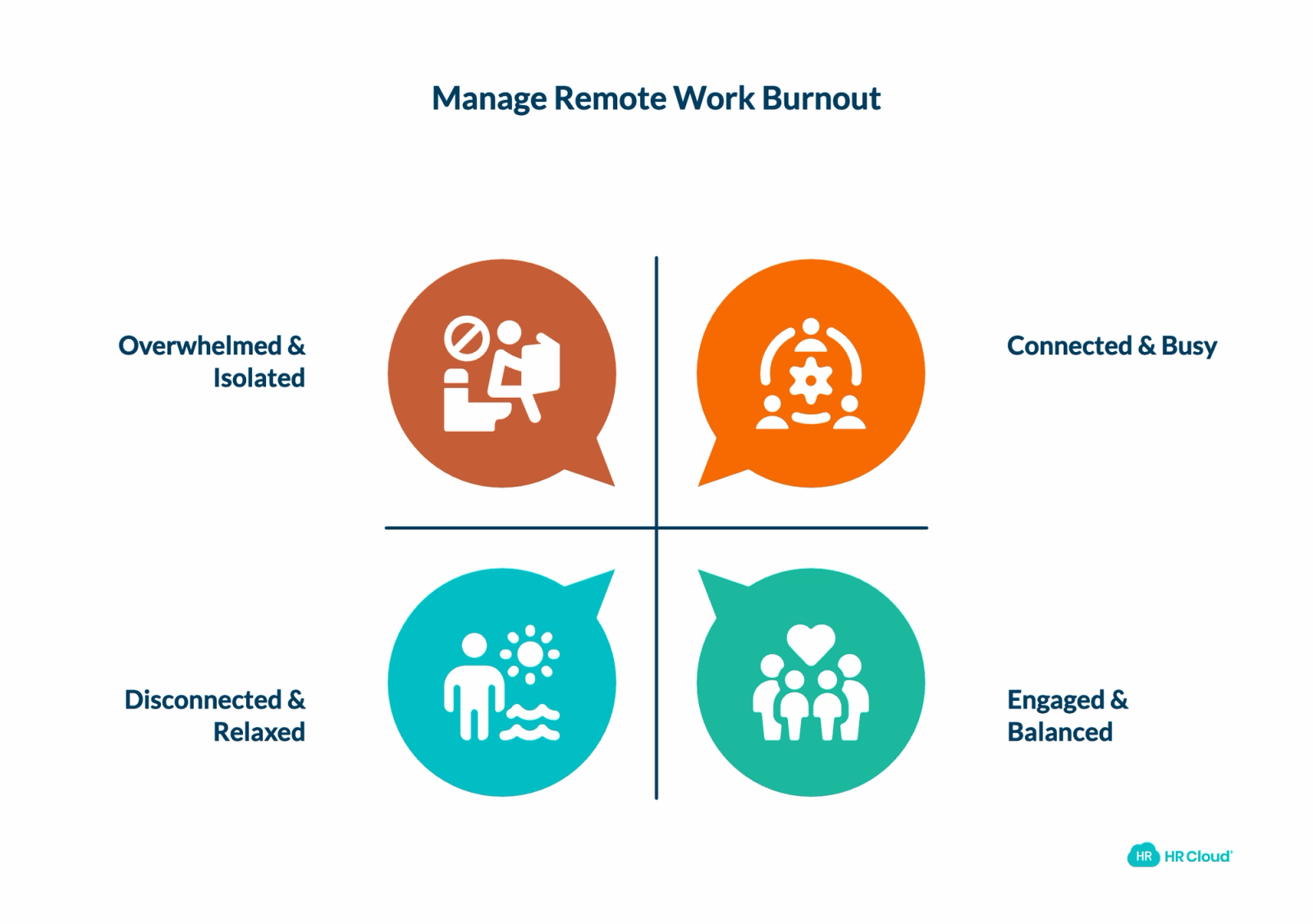
The shift to remote and hybrid work has created unique burnout risk factors. When home and work boundaries blur completely, employees struggle to turn off work mode. The "always on" culture accelerates chronic workplace stress.
Paychex research shows that assessing remote team workloads requires special attention to after-hours email and message volume, actual versus expected time off taken, meeting overload from back-to-back video calls without breaks, and the absence of informal social connection that happens naturally in physical offices. Wellhub's 2026 data adds that employees whose work environment matches their preference — whether hybrid, office, or remote — are substantially less likely to experience burnout than those forced into arrangements that do not suit them.
Workmates mobile app helps distributed teams maintain connection without requiring constant availability. Employees can check company updates, participate in recognition, and stay informed on their own schedule rather than feeling tethered to screens continuously.
The Business Case for Burnout Prevention
Ignoring employee burnout is not just bad for people — it devastates business performance. According to Gallup research on the cost of disengagement, burnout costs organizations:
- 15-20% of total payroll in voluntary turnover costs
- Increased absenteeism and higher medical costs from preventable stress-related conditions
- Lower productivity from presenteeism — physically present but mentally checked out
- Reduced innovation as exhausted employees stop taking creative risks
- Damaged employer brand as burnt-out employees share their experiences publicly
Indeed research demonstrates that burned-out employees are actively job hunting and likely to resign with minimal notice — taking institutional knowledge with them and requiring expensive replacement recruiting.
In contrast, organizations that systematically prevent burnout see substantially lower voluntary turnover, higher customer satisfaction scores because engaged employees deliver better service, improved innovation as psychological safety increases, and a stronger employer brand that attracts top talent.
Implementing a Comprehensive Approach
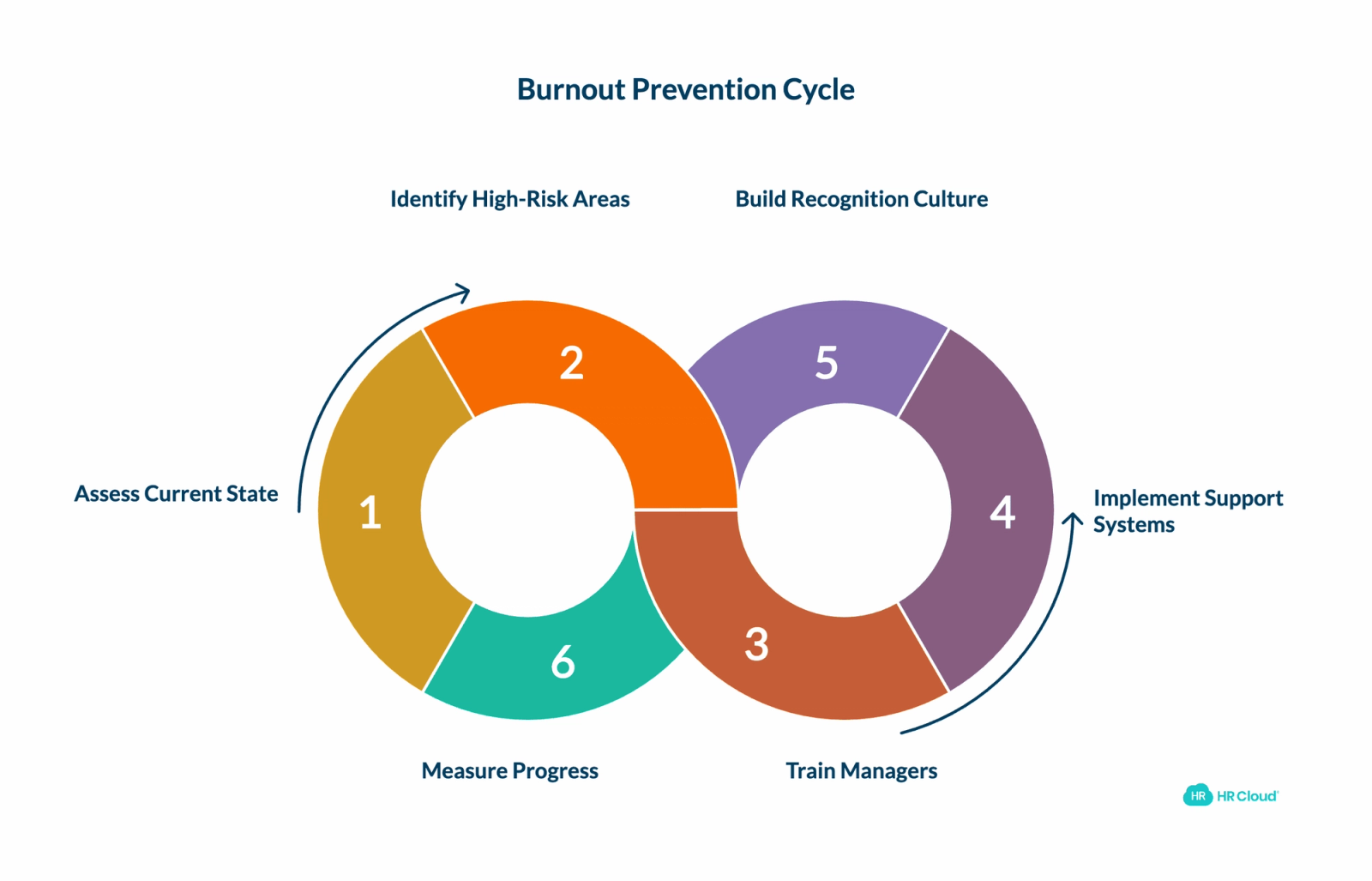
Burnout prevention strategies work best when integrated into broader employee engagement and organizational culture initiatives. Rather than treating burnout as an individual employee problem requiring individual solutions, recognize it as an organizational challenge demanding systematic responses.
Start by:
1. Assessing current state: Use anonymous surveys to understand burnout prevalence and primary causes in your specific organization
2. Identifying high-risk areas: Analyze turnover, absenteeism, and engagement data to pinpoint departments or roles with elevated burnout risk
3. Training managers: Equip supervisors with skills to recognize signs, have supportive conversations, and take action
4. Implementing support systems: Ensure employees have resources, clear boundaries, and genuine ability to say no when overloaded
5. Building recognition culture: Make appreciation frequent, specific, and aligned to organizational values
6. Measuring progress: Track leading indicators (recognition frequency, workload balance, time-off utilization) alongside lagging indicators (turnover, engagement scores)
HR Cloud's integrated platform connects these initiatives - from onboarding that sets healthy expectations to ongoing recognition through Workmates to performance management that ensures fair workload distribution.
Say Goodbye to Burnout
Employee burnout is a serious condition that can affect anyone in any workplace. But by implementing evidence-based prevention strategies, your organization can create an environment where people thrive rather than just survive.
If you notice areas within your company that could be improved — unclear expectations, insufficient recognition, unfair treatment, or unsustainable workloads — address them now. Your company will achieve far greater success when employees are healthy, engaged, and genuinely excited to contribute.
Want to see how HR Cloud helps prevent burnout systematically? Book a free demo and we will show you how Workmates, Onboard, and People HRIS work together to build a culture where people stay, grow, and do their best work.

Experience how Workmates can transform communication and strengthen culture—all in one powerful platform
Book Your Free DemoPeople Also Ask: Employee Burnout
Q: What are the main symptoms of employee burnout?
The WHO identifies three core burnout symptoms: chronic energy depletion that rest does not resolve; increased mental distance from work, including cynicism and emotional numbness; and reduced professional efficacy, where employees feel ineffective despite their best efforts. Physical symptoms such as persistent headaches, disrupted sleep, and appetite changes often accompany these psychological signs.
Q: What causes employee burnout?
Gallup's burnout research identifies five primary causes: unfair treatment, unmanageable workload, unclear communication from managers, lack of manager support, and unreasonable time pressure. Toxic workplace cultures amplify all five factors simultaneously — employees in toxic environments are eight times more likely to experience burnout than those in supportive ones.
Q: What are the four stages of burnout?
Stage 1 is normal job stress — manageable short-term pressure with consistent performance. Stage 2 is the onset of stress symptoms — anxiety, fatigue, and headaches appearing regularly with declining optimism. Stage 3 is chronic stress — daily symptoms affecting productivity and early behavioral withdrawal. Stage 4 is full burnout — severe exhaustion, complete disengagement, and active job searching.
Q: Who is most at risk for workplace burnout?
Wellhub's 2025 State of Work-Life Wellness report shows Gen Z (68%) and Millennials (61%) experience burnout at higher rates than Gen X (47%) or Boomers (30%). Women, frontline workers, nurses, project managers, and IT professionals face disproportionately elevated risk. Employees in toxic workplaces are eight times more likely to burn out than those in healthy organizational cultures.
Q: What is the business cost of employee burnout?
Gallup research shows burnout-driven voluntary turnover costs organizations 15-20% of total payroll annually. Additional costs include higher absenteeism, increased medical expenditure from stress-related conditions, and significant productivity losses from presenteeism — employees who are physically present but mentally disengaged.
Q: How can managers prevent employee burnout?
The most effective prevention combines open communication channels, manageable workloads, consistent and fair treatment, manager support as a psychological buffer, and regular meaningful recognition. Gallup's burnout research shows that when employees trust their manager has their back, burnout rates drop significantly even under challenging conditions.
About the author

Keep Reading


Like What You Hear?
We’d love to chat with you more about how HR Cloud® can support your business’s HR needs.
Book Your Free Demo