
The Science Behind Recognition and Productivity

People want a pat on the back for doing their job? Back in my day, we just worked quietly!
You've probably heard this eye-roll-inducing statement over coffee or on a LinkedIn thread. But here's what the data actually tells us: recognition in the workplace isn't about handouts or ego boosts—it's a scientifically proven driver of mental health, productivity, and long-term retention. Employee recognition mental health is no longer a nice-to-have; it's a strategic business imperative.
In fact, Gallup's latest research confirms that recognized employees are 45% less likely to quit. Beyond retention, workplace recognition programs directly impact psychological well-being, reduce burnout, and create cultures where people genuinely want to contribute.
Modern employee engagement platforms like Workmates make recognition seamless—enabling peer-to-peer kudos, automated milestone celebrations, and real-time appreciation that reaches every employee, whether they're at headquarters or on the frontline.
Employee recognition programs aren't just year-end awards for top performers. They're systematic approaches to acknowledging daily contributions through personalized gestures, public shoutouts, and meaningful rewards. These small acts create lasting impacts on employee mental wellness, team cohesion, and organizational productivity.
In this comprehensive guide, we'll explore the neuroscience behind employee recognition, examine its profound effects on mental health, and show you how to implement recognition strategies that transform both individuals and organizations.
The Psychological Impact of Corporate Awards on Employees
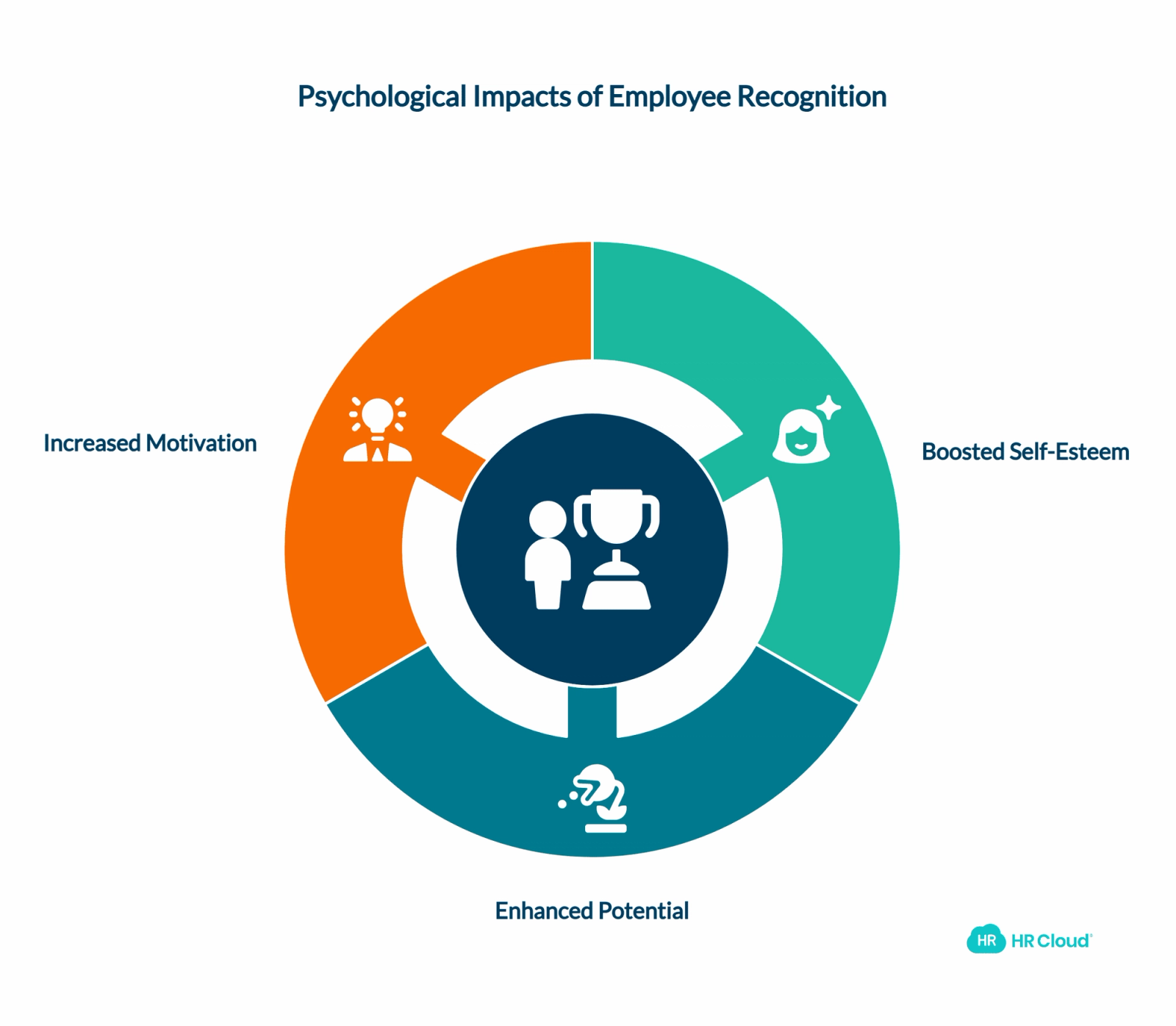
Effective employee recognition programs do more than boost morale—they fundamentally reshape how employees perceive their value within an organization. Recognition reinforces positive behaviors, validates effort, and creates psychological safety that enables risk-taking and innovation.
When employees receive timely, specific recognition, they experience validation that their work matters. This acknowledgment triggers a psychological response that extends far beyond the moment—it shapes identity, builds confidence, and strengthens organizational commitment.
Platforms like Workmates by HR Cloud make this process systematic rather than sporadic, ensuring recognition happens consistently across all teams, locations, and organizational levels.
Here are the key psychological impacts of employee recognition:
1. Recognition Boosts Self-Esteem and Validates Worth
Recognition directly addresses a fundamental human need: esteem. According to Maslow's Hierarchy of Needs, esteem encompasses respect, appreciation, and a sense of personal achievement. When employees are recognized through workplace awards or verbal acknowledgment, they gain confidence in their abilities and feel valued for their unique contributions.
This psychological validation is particularly important for frontline workers and distributed teams who may feel disconnected from organizational leadership.
In the workplace, esteem includes:
- Being respected by peers and leaders for contributions
- Feeling competent and skilled within your team
- Knowing your daily efforts drive meaningful outcomes
- Receiving acknowledgment that reinforces self-worth
Workplace awards check all these boxes. They demonstrate to employees that leadership notices their effort, peers value their collaboration, and their contributions genuinely impact organizational success. This creates a virtuous cycle where confidence fuels performance, which earns further recognition.
Research from the American Psychological Association found that employees who receive regular recognition report 23% higher self-efficacy scores compared to those who don't receive consistent acknowledgment.
2. Recognition Helps Employees Reach Their Full Potential
Employee recognition examples inspire individuals to stretch beyond their current capabilities. When you acknowledge someone's strengths and celebrate their wins, you signal that growth and excellence are valued. This encouragement motivates employees to develop new skills, volunteer for challenging projects, and take calculated risks that drive innovation.
For instance, when a customer service representative receives recognition for resolving a complex client issue, they internalize problem-solving as a core competency. This increases their likelihood of tackling similarly challenging situations proactively rather than escalating immediately.
Platforms like Workmates enable this developmental recognition through customizable badges aligned with company values—celebrating not just outcomes but also the behaviors that drive growth: collaboration, innovation, customer focus, and continuous learning.
Recognition also creates role models. When high performers receive public acknowledgment, they set visible standards that inspire colleagues. This peer influence effect is particularly powerful for employee engagement, as it demonstrates that excellence is achievable and rewarded.

3. Recognition Legitimately Releases Dopamine—The Motivation Chemical
The neuroscience behind employee recognition is compelling. Recognition triggers the brain's reward system, releasing dopamine—a neurotransmitter associated with pleasure, motivation, and reinforcement learning.
When an employee receives genuine recognition, their brain experiences a dopamine surge similar to other rewarding experiences. This chemical response:
- Creates positive associations with the recognized behavior
- Increases motivation to repeat high-performance actions
- Enhances focus and goal-directed behavior
- Strengthens neural pathways related to workplace satisfaction
This biological response explains why peer-to-peer recognition programs can be even more powerful than manager-only recognition—frequent, varied sources of acknowledgment create multiple dopamine releases throughout the workday, maintaining elevated engagement levels.
Research published in the Journal of Neuroscience demonstrates that anticipated rewards (knowing recognition may follow excellent work) activate motivation centers even before the actual acknowledgment occurs. This anticipation drives proactive performance and sustained effort toward organizational goals.
The key insight for HR leaders: recognition isn't just "feel-good" activity—it's a neurobiological intervention that literally rewires employee motivation systems. Employees who experience regular recognition develop stronger intrinsic motivation, requiring less external management to maintain high performance.
Digital recognition platforms like Workmates enable this frequent, varied recognition through social feeds, customizable kudos badges, and real-time notifications—creating multiple dopamine triggers throughout each workday.
The Link Between Employee Recognition and Mental Health
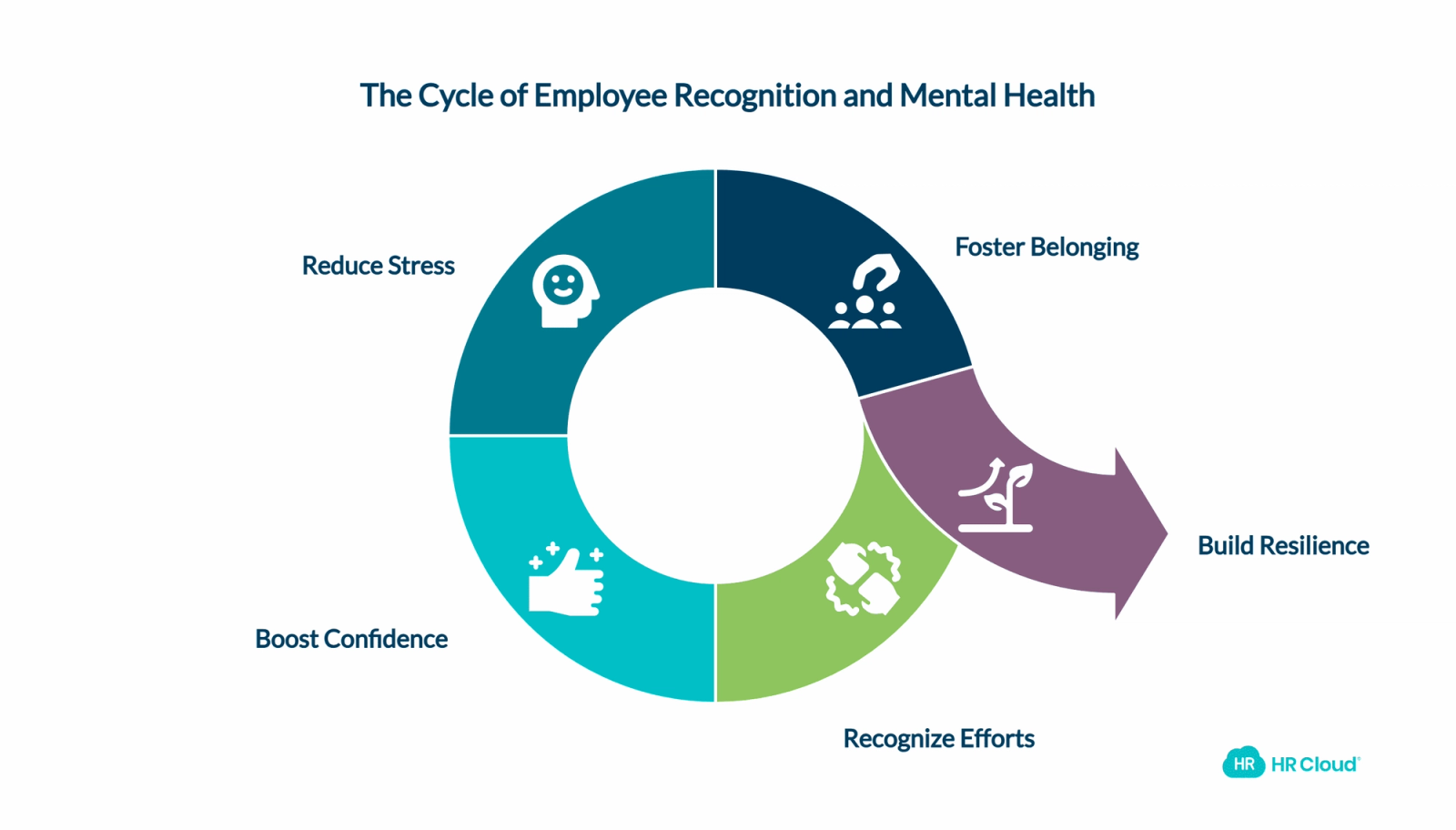
Every organization has crunch periods—product launches, quarter-end closings, or unexpected client demands that require teams to work extended hours. If these extraordinary efforts go unnoticed, they don't just disappoint employees—they actively harm mental health, creating frustration, resentment, and chronic stress.
According to the American Institute of Stress, workplace stress costs U.S. businesses over $300 billion annually in absenteeism, turnover, diminished productivity, and medical expenses. Recognition serves as a critical buffer against this epidemic of work-related stress.
Recognition at work functions as a protective psychological buffer against occupational stress and burnout. When employees know their efforts are valued—especially during high-pressure periods—it creates moments of positivity that counterbalance stress and reinforce organizational belonging.
How Recognition Reduces Workplace Stress
Workplace stress typically stems from four primary sources:
1. Excessive Workload: Feeling overwhelmed by demands
2. Lack of Control: Limited autonomy over work processes
3. Insufficient Rewards: Imbalance between effort and recognition
4. Poor Relationships: Weak connections with colleagues or managers
Recognition directly addresses sources #3 and #4 while making sources #1 and #2 more tolerable. Here's how:
Breaks the Stress Cycle
Recognition interrupts rumination about workplace challenges by shifting mental focus to achievements and positive feedback. This cognitive reframing reduces cortisol (stress hormone) levels and promotes psychological recovery.
Boosts Self-Confidence During Uncertainty
When employees receive acknowledgment during stressful periods, it counteracts self-doubt and imposter syndrome. Recognition reminds individuals they possess the capabilities to navigate challenges successfully.
Encourages Proactive Problem-Solving
Employees who feel appreciated approach obstacles with a growth mindset rather than victim mentality. Recognition fosters resilience by reinforcing agency and competence.
Organizations using comprehensive recognition platforms report 28% lower stress-related absence rates compared to companies with ad-hoc recognition practices.
Recognition Promotes Belonging and Reduces Isolation
For remote, hybrid, and distributed teams, recognition plays an even more critical mental health role. Physical isolation from colleagues can trigger:
- Loneliness and social disconnection
- Reduced sense of organizational belonging
- Uncertainty about work quality and impact
- "Out of sight, out of mind" anxiety
Employee rewards and recognition programs specifically designed for distributed workforces—like Workmates' mobile-first platform—combat these mental health risks by creating visible, frequent touchpoints that remind employees they're valued members of a cohesive team.
A 2024 study by Buffer's State of Remote Work report found that companies with structured digital recognition programs saw 34% lower reported feelings of isolation among remote workers compared to organizations without formal recognition systems.
Peer recognition is particularly powerful for mental health because it validates relationships, not just task completion. When a colleague publicly acknowledges your contribution, it affirms:
- Your value to the team extends beyond deliverables
- Your presence and participation matter to others
- You're an integral part of a community, not just an employee ID
Long-Term Mental Health Benefits of Consistent Recognition
While immediate recognition provides acute stress relief, systematic recognition programs yield cumulative mental health benefits over time:
1. Builds Emotional Resilience
Consistent recognition helps employees develop stronger emotional resilience—the ability to bounce back from setbacks, handle criticism constructively, and maintain perspective during challenges. When individuals have a "resilience bank" of positive recognition experiences, temporary failures or difficult feedback don't trigger catastrophic thinking patterns.
2. Reduces Burnout Risk
Burnout—characterized by emotional exhaustion, depersonalization, and reduced professional efficacy—affects an estimated 76% of employees according to Deloitte research. Recognition serves as a powerful antidote because it:
- Restores sense of purpose when work feels meaningless
- Validates that effort is noticed, countering cynicism
- Rebuilds confidence in professional competence
Organizations using Workmates recognition features report 41% lower burnout indicators on employee engagement surveys compared to baseline measurements.
3. Strengthens Psychological Safety
Psychological safety—the belief that you can take interpersonal risks without fear of punishment or humiliation—is foundational to mental health at work. Recognition contributes to psychological safety by:
- Creating positive ratio of interactions (research suggests 5:1 positive-to-negative)
- Demonstrating that contributions are valued, reducing fear of judgment
- Building trust between employees and leadership
Teams with high psychological safety show 67% lower anxiety disorders and 55% lower depression symptoms among members according to research by Dr. Amy Edmondson at Harvard Business School.
4. Prevents "Quiet Quitting" and Disengagement
The mental health implications of disengagement are significant—disengaged employees experience higher rates of depression, anxiety, and physical health problems. Recognition prevents this downward spiral by:
- Maintaining emotional connection to work and colleagues
- Reinforcing that individual effort impacts collective outcomes
- Creating positive workplace memories that buffer against negativity
5. Supports Recovery from Work-Related Mental Health Challenges
For employees returning from stress leave or managing diagnosed mental health conditions, recognition plays a therapeutic role in workplace reintegration. It:
- Validates their value despite time away from work
- Reduces anxiety about performance expectations
- Rebuilds confidence gradually through small acknowledgments
A longitudinal study published in the Journal of Occupational Health Psychology found that employees who received consistent recognition during recovery periods returned to pre-leave productivity 40% faster than those without structured recognition support.
Recognition as Preventative Mental Health Strategy
Forward-thinking organizations increasingly view recognition as preventative mental health care rather than reactive morale-boosting. Just as physical wellness programs focus on prevention (gym memberships, health screenings, nutrition education), mental health strategies must include proactive recognition systems that build resilience before crises occur.
This preventative approach is why platforms like Workmates include analytics dashboards that track recognition patterns—enabling HR teams to identify employees or teams at risk of disengagement before mental health deteriorates significantly.
The mental health benefits of recognition are compelling—but do they actually translate into measurable productivity gains? The answer is an emphatic yes.
Awards and Productivity: A Correlation
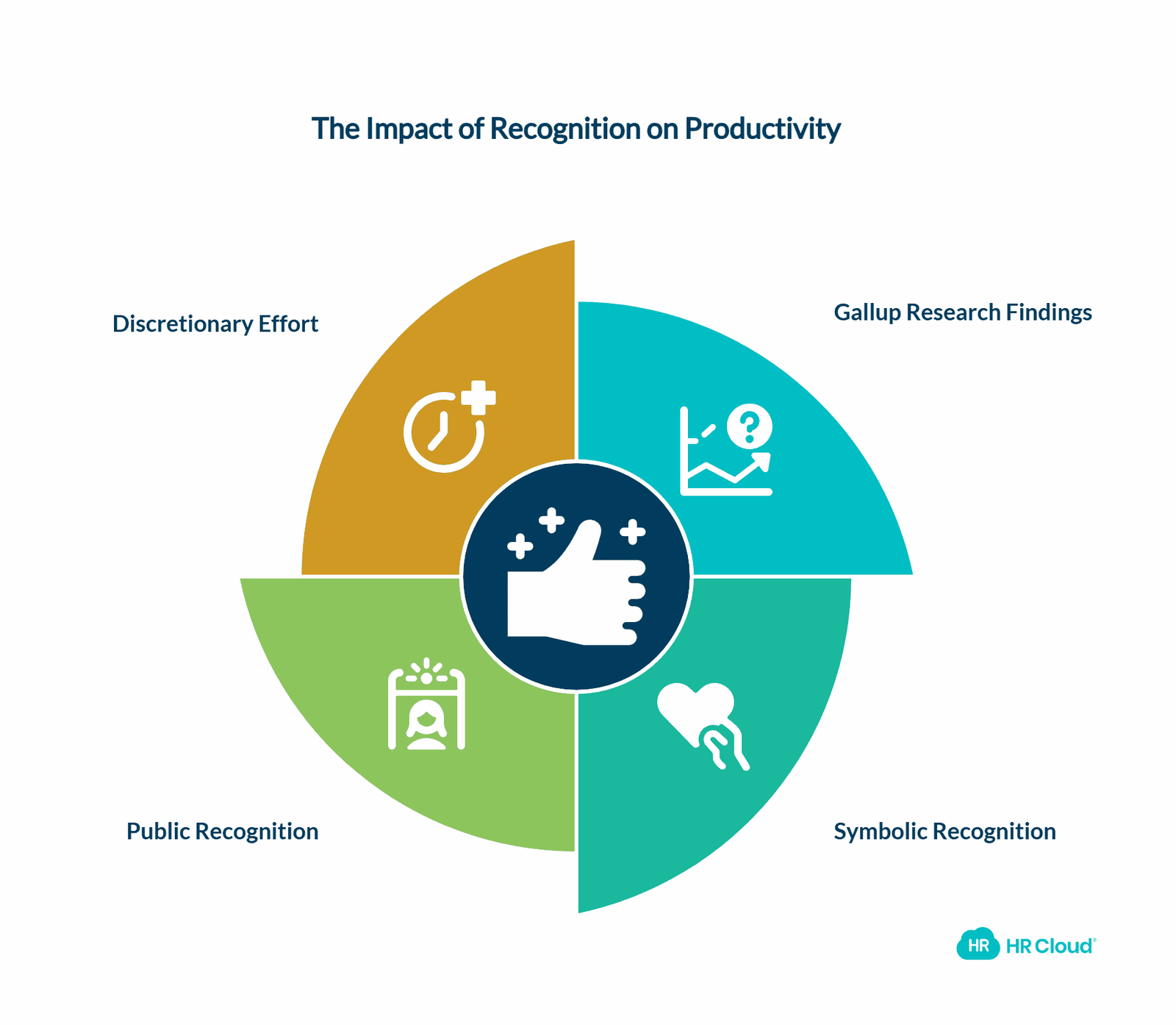
Recognition doesn't just make employees feel better—it directly improves their performance. The relationship between appreciation and productivity isn't merely correlational; research demonstrates clear causal pathways from recognition to measurable business outcomes.
According to research from Gallup, business units with high recognition frequency show:
- 14% higher productivity scores
- 18% higher sales revenue
- 23% higher profitability
- 41% lower quality defects
These aren't marginal improvements—they represent substantial competitive advantages driven primarily by systematic employee appreciation.
The Power of Symbolic Recognition
Symbolic recognition—personalized thank-you notes, certificates, or public acknowledgment—provides a cost-effective alternative to monetary rewards while delivering comparable or superior motivational impact.
A study by Harvard Business Review examined public sector employees and revealed that even simple gestures significantly improved subjective well-being and workplace engagement.
The research divided social workers into two groups:
- Recognition Group: Received personalized letters from leadership acknowledging specific positive impacts of their work
- Control Group: Received no special communication
Results were dramatic:
- Recognition group showed 17% improvement in self-reported well-being
- Absenteeism decreased by 22% in the following quarter
- Peer-rated job performance increased by 12%
- Voluntary turnover reduced by 31% over six months
The remarkable insight: These letters cost virtually nothing to produce yet generated measurable productivity gains and retention improvements valued at thousands of dollars per employee.
Unlike monetary rewards, which research shows often create unintended competition or perceptions of unfairness, symbolic recognition encourages a culture of shared respect and mutual acknowledgment. This cultural shift produces sustainable productivity gains rather than temporary performance spikes.
Public Recognition Creates Ripple Effects
One underappreciated aspect of recognition is its multiplicative effect. When one employee receives public acknowledgment, the impact extends far beyond the individual recipient.
Public recognition during team meetings or through platforms like Workmates social recognition feeds creates positive ripple effects:
Inspires Peer Performance
Witnessing a colleague's recognition motivates others to pursue similar excellence. This peer influence is particularly powerful among employees at similar organizational levels—"If they can achieve this recognition, so can I."
Clarifies Performance Expectations
Public recognition communicates organizational priorities more effectively than written policies. When leadership celebrates specific behaviors or outcomes, it signals "this is what excellence looks like here."
Builds Team Cohesion
Celebrating individual wins within team contexts strengthens group identity. Rather than creating jealousy, properly framed recognition reinforces "we're all working toward shared success."
However, public recognition must be managed thoughtfully to avoid creating negative comparisons or perceptions of favoritism. Best practices include:
- Recognizing diverse achievement types (not just sales results)
- Rotating recognition across departments and roles
- Balancing individual and team acknowledgments
- Using transparent criteria for formal awards
Workmates addresses this concern by enabling multiple recognition pathways: peer-nominated kudos, manager-initiated awards, milestone celebrations, and values-based badges—ensuring recognition feels inclusive rather than exclusive.
“The platform connects associates to each other in a way that doesn’t happen through email.”
— Gail Gust, Director of Marketing and Business Development

Recognition Drives Discretionary Effort
Perhaps recognition's most valuable productivity impact is its effect on discretionary effort—the work employees choose to do beyond minimum requirements.
Research from Willis Towers Watson found that highly engaged employees (characterized by frequent recognition) contribute 57% more discretionary effort than disengaged colleagues. This translates into:
- Proactively identifying and solving problems
- Mentoring colleagues without being asked
- Suggesting process improvements
- Staying late to meet critical deadlines
- Going above and beyond in customer interactions
This discretionary effort cannot be mandated or monitored—it emerges organically from employees who feel valued and connected to organizational mission. Recognition serves as the primary driver of this invaluable, voluntary contribution.
Organizations using comprehensive recognition platforms like Workmates report 34% higher discretionary effort indicators on engagement surveys compared to companies with informal recognition practices.
Implementing Effective Recognition Programs
Understanding recognition's benefits is important—but implementation is everything. Many well-intentioned recognition programs fail due to poor design, inconsistent execution, or misalignment with organizational culture.
Creating an impactful employee recognition program requires clear goals, genuine inclusivity, alignment with core values, and commitment to sustained effort beyond initial enthusiasm. Here's how to get it right.
Best Practices for Creating Recognition Programs
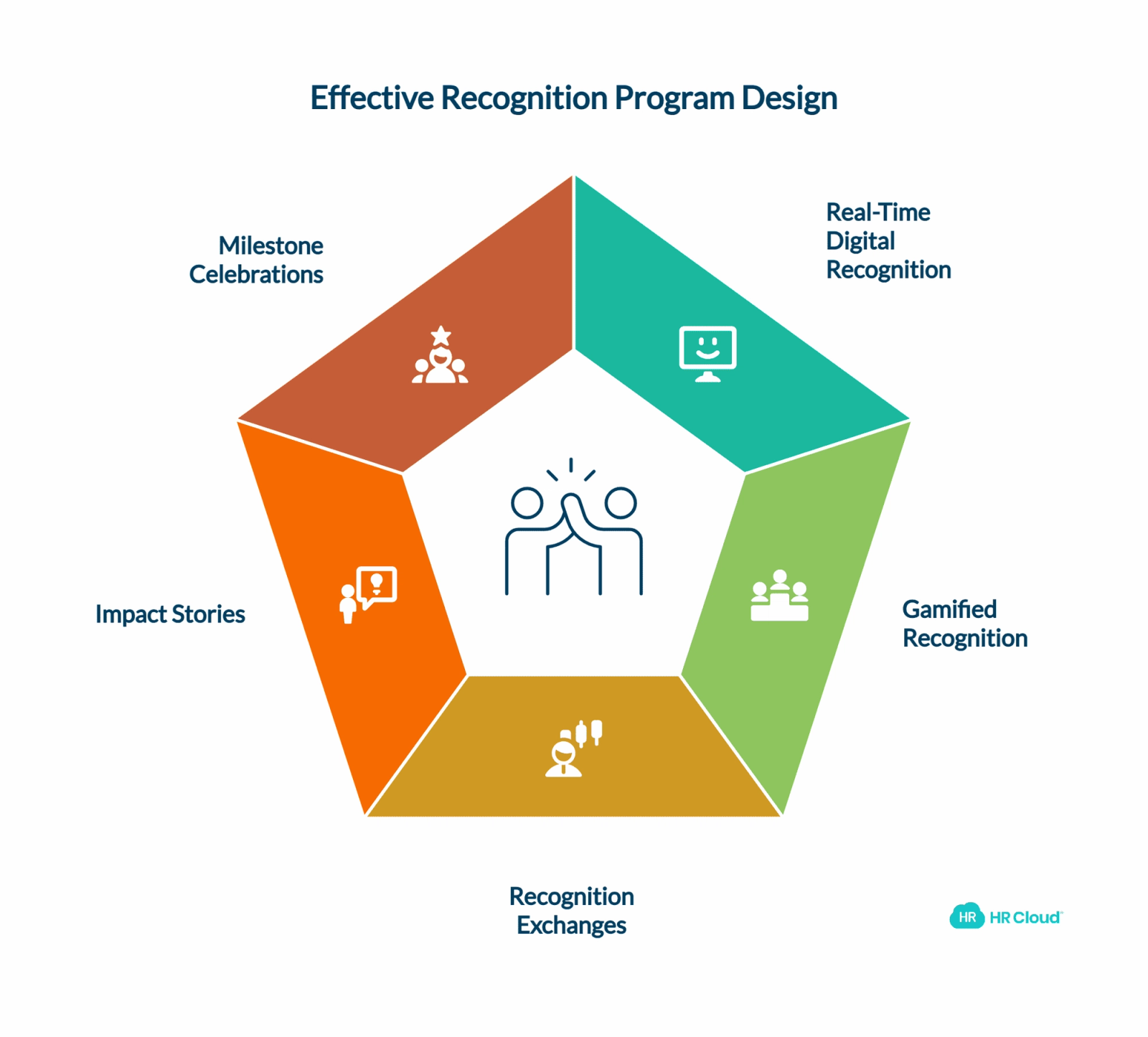
Recognition programs should be designed with intentionality, scalability, and long-term engagement in mind. These five innovative practices separate exceptional programs from mediocre ones:
1. Implement Real-Time Digital Recognition Platforms
Delayed recognition loses impact—neuroscience research shows that dopamine responses are strongest when rewards immediately follow behaviors. Real-time recognition requires infrastructure that enables instant acknowledgment.
Employee recognition software like Workmates allows peers and managers to give immediate, public kudos visible across the organization. This creates:
- Spontaneous appreciation culture vs. scheduled recognition events
- Multiple daily touchpoints vs. quarterly awards ceremonies
- Peer-driven momentum vs. top-down mandate
Technical capabilities to prioritize:
- Mobile accessibility for frontline workers without desk access
- Slack/Teams integration for recognition within daily workflows
- Social feed visibility ensuring acknowledgment reaches beyond sender-recipient
- Push notifications maintaining recognition prominence
2. Gamify Recognition with Meaningful Point Systems
Introducing friendly competition through points-based platforms adds excitement while maintaining focus on values rather than pure output metrics. Effective gamification includes:
- Points for multiple behaviors: collaboration, innovation, customer service, safety compliance, mentoring
- Tiered redemption options: small rewards (coffee gift cards) to significant perks (extra PTO day)
- Leaderboards with rotation: monthly/quarterly resets prevent permanent "winners" and "losers"
- Team challenges: collective point goals that encourage collaboration
Workmates' gamified recognition system allows organizations to customize point values, redemption catalogs, and challenge parameters—ensuring alignment with specific cultural priorities and budget constraints.
Critical warning: Gamification can backfire if poorly designed. Avoid:
- Exclusively competitive structures that undermine teamwork
- Point systems that feel manipulative or infantilizing
- Redemption barriers that create frustration
- Opaque calculation methods that seem arbitrary
3. Create Recognition Exchanges and Social Amplification
Implement systems where employees can recognize and reward each other with visible "tokens of appreciation" that cascade across the organization. This peer-driven approach:
- Democratizes recognition beyond manager authority
- Increases recognition frequency exponentially
- Strengthens cross-functional relationships
- Identifies emerging leaders through giving patterns
Workmates enables this through social feed architecture where kudos badges appear prominently, colleagues can comment/react, and recognition threads create ongoing engagement rather than isolated moments.
4. Spotlight Personal Impact Stories
Generic recognition ("great job this quarter!") lacks the emotional resonance of specific narratives. Feature employees' contributions through:
- Video spotlight series: 60-90 second interviews where recognized employees describe their project and impact
- Internal newsletter features: 300-word stories highlighting challenge faced, solution implemented, and outcomes achieved
- Leadership shoutouts: Executives personally acknowledging specific contributions in company-wide communications
Effective impact stories follow this framework:
- Challenge: What problem/opportunity existed?
- Action: What did this employee do specifically?
- Result: What measurable outcome occurred?
- Values Connection: How does this exemplify company values?
5. Celebrate Meaningful Milestones Authentically
Service anniversary recognition acknowledges loyalty, but authentic milestone celebration extends beyond tenure:
- Project completions: Major deliverable achievements
- Skill certifications: Professional development investments
- Team leadership: First-time managers or project leads
- Innovation: Patent filings, process improvements, creative solutions
- Customer impact: Exceptional service stories, relationship building
- Values embodiment: Consistent demonstration of core principles
Platforms like Workmates automate milestone tracking while enabling customization of which milestones warrant organization-wide celebration versus team-level acknowledgment.
How to Measure Recognition Program Success
Recognition program ROI extends beyond participation rates—though measuring implementation effectiveness requires multi-dimensional assessment.
Quantitative Metrics:
1. Participation Rate and Distribution
Track not just overall participation but distribution across:
- Departments (are some teams excluded?)
- Locations (do remote workers participate equally?)
- Organizational levels (do frontline workers engage?)
- Giving vs. receiving patterns (is recognition concentrated or dispersed?)
Target: 80%+ employees giving or receiving recognition monthly
2. Retention and Turnover Analysis
Correlate recognition frequency with retention data:
- Compare turnover rates among frequently vs. infrequently recognized employees
- Analyze recognition patterns of employees who depart (were they systematically overlooked?)
- Track time-to-fill for positions in high-recognition versus low-recognition teams
Research by Gallup shows recognized employees are 45% less likely to turn over—but your organization's specific correlation provides actionable insight for targeted interventions.
3. Performance Metric Correlation
Analyze relationships between recognition and:
- Individual productivity metrics (sales, output, customer satisfaction scores)
- Quality indicators (error rates, rework requirements, defect percentages)
- Innovation measures (improvement suggestions, patent applications, process optimizations)
Workmates analytics dashboard enables this correlation analysis by connecting recognition data with performance management systems—revealing which recognition types correlate most strongly with desired outcomes.
4. Engagement Survey Alignment
Monitor engagement survey scores specifically related to recognition:
- "I feel valued for my contributions"
- "My manager recognizes my work regularly"
- "My peers appreciate my efforts"
- "Recognition here feels fair and transparent"
Target: 80%+ favorable responses on recognition-related items
5. Program Adoption Velocity
Track how quickly recognition practices become habitual:
- Time from program launch to 50% participation
- Recognition frequency increase month-over-month
- Percentage of managers giving recognition weekly
- Peer-to-peer recognition as percentage of total
Qualitative Assessment:
6. Employee Story Collection
Gather qualitative feedback through:
- Focus groups exploring recognition experiences
- One-on-one interviews with both givers and receivers
- Anonymous suggestion boxes for program improvements
- Analysis of recognition message content and themes
7. Manager Feedback and Behavioral Change
Recognition programs require manager buy-in. Assess through:
- Manager surveys on program ease-of-use and value
- Observation of recognition frequency before/after training
- Analysis of which managers are recognition champions versus laggards
8. Net Promoter Score (NPS) for Recognition Programs
Adapt the NPS framework: "How likely are you to recommend our recognition program to colleagues at other companies?"
- Scores 9-10: Promoters
- Scores 7-8: Passives
- Scores 0-6: Detractors
Target: NPS of +30 or higher indicates healthy program perception
9. Recognition Equity Analysis
Use HR analytics to ensure recognition is distributed equitably across:
- Gender (are women recognized equally to men?)
- Ethnicity (are BIPOC employees recognized proportionally?)
- Age groups (are older workers or younger workers systematically overlooked?)
- Job levels (do frontline workers receive recognition comparable to knowledge workers?)
Critical insight: Inequitable recognition distribution undermines entire programs. If analysis reveals bias, immediately address through manager training and structural interventions.
Workmates recognition equity reports provide demographic breakdowns highlighting potential gaps requiring attention.
Common Pitfalls to Avoid in Employee Recognition
Even well-intentioned recognition initiatives can backfire if poorly designed or implemented. Here are critical mistakes to watch for and strategies to address them:
1. Overly Generic Recognition
The Problem:
Blanket recognition like monthly "Employee of the Month" programs selected through opaque processes feel impersonal, demotivating, and potentially unfair—especially if employees perceive favoritism or arbitrary selection.
Why It Fails:
Generic recognition lacks the specificity that makes acknowledgment meaningful. Employees want to know exactly what they did well and why it mattered. Vague praise ("great job!") provides no actionable feedback and minimal dopamine response.
The Solution:
Personalize recognition by highlighting specific achievements and tailoring acknowledgments to individual contributions. Effective recognition includes:
- Specific behavior: "Your solution to the inventory discrepancy saved 40 hours of manual work"
- Impact explanation: "This efficiency gain allows the team to focus on customer service improvements"
- Values connection: "Your innovative thinking exemplifies our 'continuous improvement' value"
Workmates enables detailed recognition through customizable kudos templates that prompt givers to include specifics rather than generic praise.
2. Favoritism in Recognition
The Problem:
When recognition concentrates among a select group (often high-visibility roles like sales or those with close manager relationships), it breeds resentment among overlooked employees and damages team morale.
Why It Fails:
Perceived unfairness destroys recognition programs faster than anything else. If employees believe recognition is political rather than merit-based, the entire system loses credibility.
The Solution:
Establish transparent recognition criteria and monitoring:
- Published guidelines: Clear description of what warrants recognition
- Multiple nomination pathways: Peer nominations, manager nominations, self-nominations
- Equity reporting: Regular analysis ensuring distribution across departments, roles, demographics
- Rotating categories: Different recognition types (collaboration, innovation, customer service, mentoring) ensuring diverse strengths are celebrated
Organizations using Workmates peer recognition features see 67% more equitable distribution compared to manager-only programs because multiple organizational members can initiate acknowledgment.
3. Overemphasis on Monetary Rewards
The Problem:
Relying solely on financial incentives shifts focus from intrinsic motivation (pride in work, purpose, mastery) to extrinsic motivation (getting paid), ultimately reducing long-term engagement and satisfaction.
Why It Fails:
Research by Edward Deci and Richard Ryan on Self-Determination Theory demonstrates that excessive external rewards can actually decrease intrinsic motivation—a phenomenon called the "overjustification effect." Employees begin working for bonuses rather than meaning.
The Solution:
Balance financial rewards with symbolic gestures that cultivate intrinsic motivation:
- Personalized thank-you notes from executives
- Public recognition in team meetings or company communications
- Development opportunities like conference attendance or special projects
- Autonomy rewards such as choice of next assignment or flexible work arrangements
Workmates reward catalogs include both monetary redemptions (gift cards) and experiential options (extra PTO, lunch with leadership, charitable donations) giving recipients meaningful choice.
4. Ignoring Team Contributions
The Problem:
Focusing exclusively on individual recognition undermines teamwork by creating competitive environments where collaboration takes a backseat to personal achievement.
Why It Fails:
Most organizational success requires collective effort. If recognition only spotlights individuals, it sends the message "individual heroics matter more than team success"—directly contradicting collaboration imperatives.
The Solution:
Include team-based awards celebrating collective efforts:
- "Outstanding Project Team" for successful deliverables requiring cross-functional coordination
- "Collaboration Champions" for groups demonstrating exceptional teamwork
- "Innovation Squad" for teams implementing creative solutions
- "Customer Success Team" for collective improvements in satisfaction metrics
Effective team recognition follows this format:
- Acknowledge the team collectively first
- Highlight 2-3 specific team members' unique contributions (rotating among all members over time)
- Emphasize how collaboration created outcomes impossible individually
- Celebrate the team success publicly while distributing rewards equitably
5. Inconsistent or Infrequent Recognition
The Problem:
Sporadic recognition makes employees uncertain about what behaviors are valued, diminishes program credibility, and fails to create sustained engagement improvements.
Why It Fails:
Recognition effectiveness depends on consistency and recency. Quarterly recognition events lack the frequency needed to shape daily behaviors. Employees need regular acknowledgment to maintain motivation and connection.
The Solution:
Create structured recognition cadences ensuring consistency:
- Daily: Peer-to-peer kudos for small wins (enabled by platforms like Workmates)
- Weekly: Manager recognition during team meetings or 1-on-1s
- Monthly: Department or location spotlights in company communications
- Quarterly: Formal awards ceremonies for major achievements
- Annual: Service anniversaries and year-end recognition
Research suggests managers should aim for recognizing each direct report at least once every two weeks, while organizations should target monthly recognition reach of 70%+ of workforce.
Workmates analytics tracks recognition frequency and alerts leaders when employees or teams haven't received acknowledgment in 30+ days—enabling proactive intervention before disengagement occurs.
HR Cloud's Employee Award & Recognition Checklist
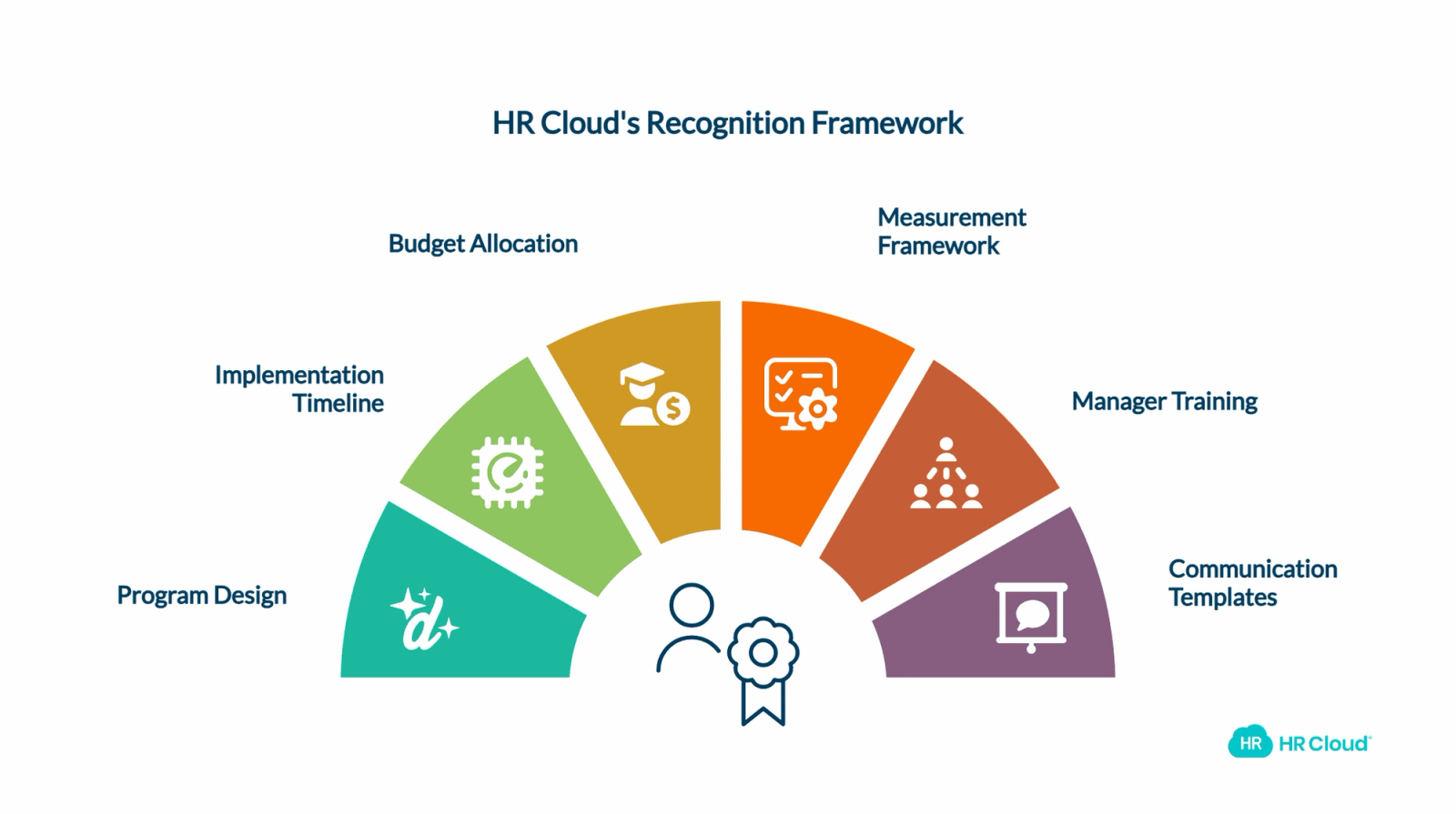
Building a recognition program that drives real results requires thoughtful planning, clear objectives, and systematic implementation. Avoid common mistakes and accelerate your success with our comprehensive framework.
Ready to get started?
Download our Employee Award & Recognition Checklist to access:
- Recognition program design worksheets
- Implementation timeline templates
- Budget allocation guidelines
- Measurement framework and KPI tracking tools
- Manager training materials
- Launch communication templates
This practical checklist walks you through every step—from initial planning to ongoing optimization—ensuring your recognition program builds a thriving workplace culture and delivers measurable engagement improvements.
Organizations following this framework report 56% higher employee engagement scores and 34% lower turnover within the first 12 months of implementation.
Building Resilient Teams Through Meaningful Recognition
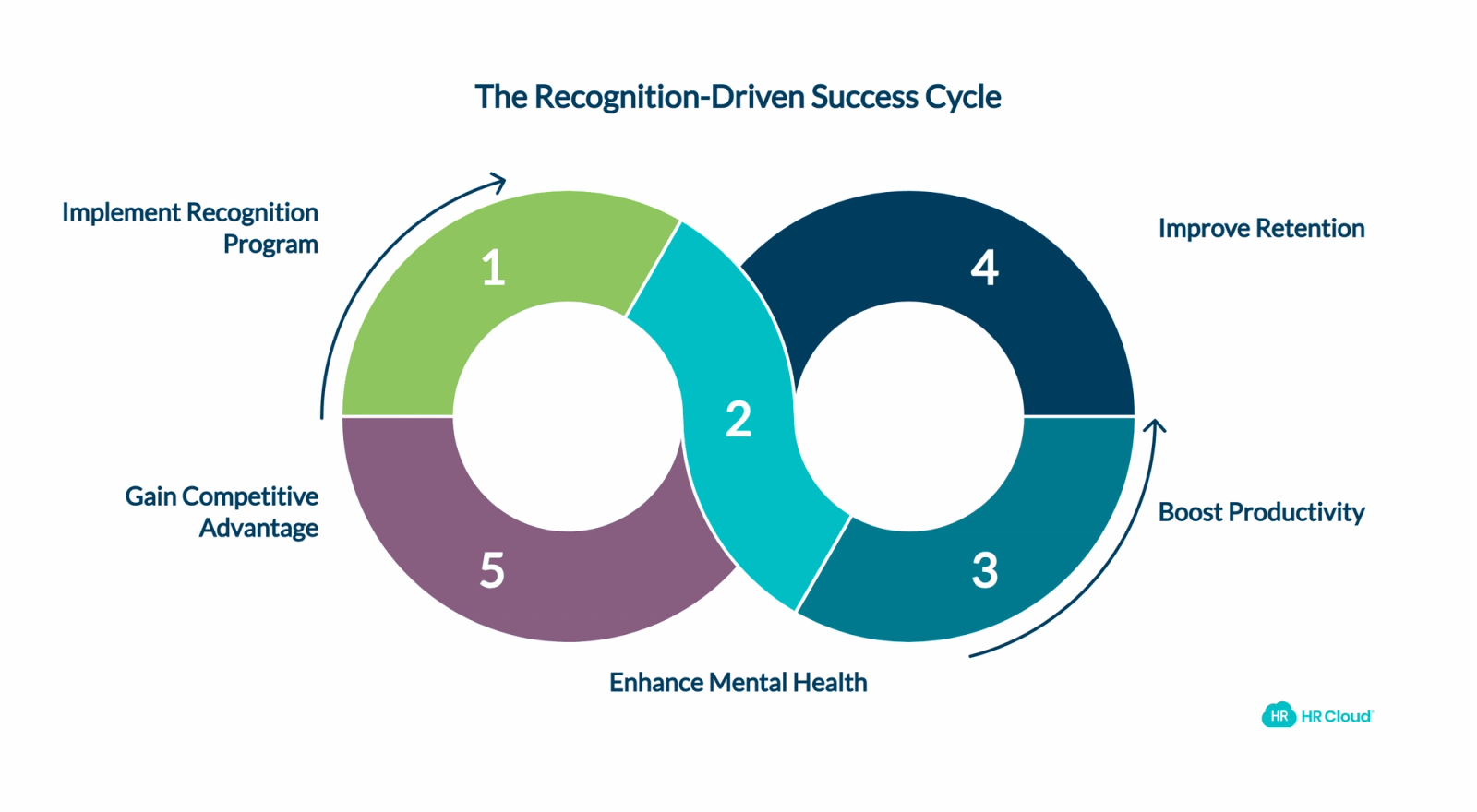
Employee recognition isn't a "nice-to-have" perk or touchy-feely initiative—it's a scientifically validated driver of mental health, sustained engagement, and measurable productivity. Organizations that treat recognition as a strategic business function rather than an afterthought gain decisive competitive advantages in talent attraction, retention, and performance.
The evidence is overwhelming:
- Mental Health Impact: Recognition reduces stress, prevents burnout, strengthens emotional resilience, and creates psychologically safe environments where people thrive
- Productivity Correlation: Recognized employees deliver 14% higher productivity, contribute 57% more discretionary effort, and drive innovation through proactive problem-solving
- Retention ROI: Companies with mature recognition programs see 31% lower voluntary turnover and 45% higher retention of high performers
As organizations evolve, the future of recognition lies in:
- Digital-first platforms enabling real-time acknowledgment accessible to distributed, frontline, and remote workers
- Inclusive design ensuring recognition reaches all employee populations regardless of role, location, or demographic background
- AI-powered insights identifying at-risk employees through recognition pattern analysis
- Values-aligned customization connecting recognition to specific organizational culture priorities
However, recognition programs must avoid systemic pitfalls to remain effective:
- Favoritism undermines credibility faster than anything—ensure transparent criteria and equitable distribution
- Inconsistency signals that recognition isn't truly valued—build sustainable cadences rather than sporadic initiatives
- Generic praise lacks impact—train leaders to provide specific, behavior-focused acknowledgment
The connection between recognition, mental health, and productivity underscores the critical need for ongoing employee recognition research to refine strategies and adapt to changing workforce expectations. What worked in traditional office environments requires evolution for hybrid and remote-first organizations.
Workmates by HR Cloud provides the comprehensive platform modern organizations need to make recognition systematic rather than sporadic:
- Real-time peer-to-peer and manager recognition
- Mobile-first design reaching frontline and distributed workers
- Customizable rewards catalogs balancing monetary and experiential options
- Analytics dashboards tracking equity, frequency, and business impact
- Seamless integrations with ADP, Workday, UKG, and other HRIS platforms
Ready to transform your workplace with a recognition program that drives measurable results?
Start designing your strategy today with a personalized Workmates demo—and watch your team thrive.

Experience how Workmates can transform communication and strengthen culture—all in one powerful platform
Book Your Free DemoFrequently Asked Questions
1. What types of employee recognition are most effective?
The most effective employee recognition programs combine personalized gestures with formal acknowledgments, creating multiple touchpoints throughout the employee experience.
High-impact recognition types include:
- Spontaneous peer-to-peer kudos: Real-time acknowledgment from colleagues using platforms like Workmates that enable instant recognition through social feeds
- Manager-to-employee appreciation: Specific, behavior-focused acknowledgment during 1-on-1s or team meetings
- Formal workplace awards: Structured programs like "Top Innovator," "Customer Hero," or "Employee of the Month" with clear selection criteria
- Milestone celebrations: Automated recognition for work anniversaries, project completions, certifications, and personal events (birthdays)
- Executive recognition: Leadership shoutouts in company-wide communications demonstrating appreciation from the highest levels
Research from Workhuman shows that frequency matters more than magnitude—employees prefer weekly small acknowledgments over annual large awards. Digital recognition platforms enable this high-frequency approach at scale.
Even simple gestures like personalized thank-you notes or public shoutouts can make a substantial impact on employee motivation and job satisfaction when delivered authentically and specifically.
2. How can organizations measure the impact of their recognition programs?
Organizations can assess recognition program success through multiple quantitative and qualitative approaches:
Quantitative Metrics:
- Retention rates: Compare turnover among frequently recognized vs. infrequently recognized employees
- Productivity measures: Track output, quality scores, customer satisfaction changes correlated with recognition implementation
- Engagement survey scores: Monitor recognition-specific questions like "I feel valued for my contributions"
- Program participation rates: Measure percentage of employees giving and receiving recognition monthly
- Recognition equity distribution: Analyze demographics ensuring fair distribution across gender, ethnicity, departments, roles
Workmates analytics dashboard simplifies this data collection by automatically tracking participation patterns, recognition frequency, reward redemptions, and correlations with HR metrics like absence rates and performance scores.
Qualitative Assessment:
- Employee surveys and feedback through pulse surveys or focus groups
- Manager insights from recognition program sponsors
- Success stories and testimonials from recognized employees
- Staff appreciation event observations and participation levels
Comprehensive measurement should occur quarterly during the first year, then shift to biannual assessments once programs mature—with ongoing monitoring of participation rates weekly/monthly.
3. Are there any negative effects associated with employee recognition?
While recognition generally produces positive outcomes, poorly designed programs can indeed create unintended negative consequences:
Potential Negative Effects:
1. Perceived Unfairness and Favoritism When recognition feels arbitrary or concentrated among select employees, it damages morale among those overlooked. This is particularly harmful if recognition correlates with manager relationships rather than actual performance.
Solution: Establish transparent criteria, enable peer nominations, use multiple recognition categories, and conduct equity audits ensuring distribution across demographics and departments.
2. Excessive Competition Undermining Collaboration
Overly competitive recognition (leaderboards with permanent rankings, zero-sum awards) can make employees view colleagues as rivals rather than teammates.
Solution: Balance individual and team recognition, rotate competition timeframes (monthly resets), recognize diverse contributions (not just sales/output), and include collaborative behaviors in recognition criteria.
3. "Recognition Inflation" Reducing Value
If recognition becomes so frequent and generic that it loses meaning, employees may view it cynically as "participation trophies" rather than genuine acknowledgment.
Solution: Maintain specificity in recognition (detailed descriptions of what was achieved and why it matters), vary recognition types (not everything warrants the same level), and reserve certain awards for truly exceptional performance.
4. Exclusion of Remote and Hybrid Workers
Recognition programs designed for in-office visibility can systematically exclude remote workers who lack face-time with leadership.
Solution: Implement digital recognition platforms like Workmates ensuring distributed workers participate equally, train managers on recognition equity for remote teams, and include asynchronous recognition methods.
5. Stress from Public Recognition
Some individuals experience genuine anxiety from public acknowledgment, particularly those with cultural backgrounds emphasizing humility or those managing social anxiety.
Solution: Offer recognition options (public vs. private), ask employees about preferences during onboarding, and create multiple recognition pathways allowing individuals to opt toward their comfort level.
The key insight: The solution to potential negative effects isn't eliminating recognition—it's designing inclusive, equitable, varied programs that avoid systemic pitfalls. This requires intentional program architecture and ongoing monitoring.
The key is balancing recognition to support overall employee relations and contribute positively to the workplace environment. Properly designed recognition systems using platforms like Workmates account for these potential issues through diverse recognition types, transparent criteria, and robust analytics.
About the author

Keep Reading


Like What You Hear?
We’d love to chat with you more about how HR Cloud® can support your business’s HR needs.
Book Your Free Demo