
Best HR Platforms in 2026, Compared by Business Size

The best HR platform depends on company size, workforce type, and the payroll system you already run. In this 2026 comparison of 14 HR platforms, BambooHR and HR Cloud fit small businesses; HR Cloud, Rippling, and HiBob fit mid-market companies with 50 to 500 employees; and Workday, SAP SuccessFactors, and Oracle HCM fit large global enterprises. HR Cloud is built for frontline and distributed teams: it combines onboarding, Workmates engagement, performance, and time off in one modular platform and connects to payroll systems including ADP, UKG, and Paylocity.
What separates a good HR software platform from the right one for your business?
The best HR software isn't determined by feature count alone—it's about finding the platform that matches your company size, solves your most pressing people challenges, and scales with your growth. That's exactly what this guide helps you do.
Why does platform choice matter so much in 2026?
With the HR software landscape now exceeding 300 solutions, making the wrong call means wasted implementation time, low adoption, and unresolved HR bottlenecks that quietly drain productivity and retention.
How can HR leaders and business owners cut through the noise?
By using a structured evaluation framework—comparing platforms like HR Cloud, BambooHR, Workday, and Rippling across onboarding, engagement, compliance, and scalability—so you invest in a solution built for organizations exactly like yours.
"The best HR software isn't just about features—it's about finding the platform that grows with your team and solves your most pressing people challenges."
The HR software landscape has exploded over the past few years. What started as simple employee database systems has evolved into sophisticated human capital management platforms that can automate everything from onboarding to performance reviews. Yet with over 300 HR software companies and solutions in the market today, choosing the right one feels like searching for a needle in a haystack.
Here's the thing: there's no universal "best" HR software. The right platform depends entirely on your company size, specific HR pain points, and growth trajectory. A startup with 25 employees has vastly different needs than a multinational corporation managing 10,000+ workers across six time zones.
Modern businesses are increasingly seeking all-in-one HR solutions that eliminate the complexity of managing multiple point solutions. The shift toward cloud-based HR software has accelerated as organizations prioritize flexibility, scalability, and remote accessibility.
This comprehensive hr software comparison breaks down the top HR software platforms of 2026, categorizing them by business size and use case. We'll dive deep into features, pricing considerations, and real-world implementation insights to help you make an informed decision. Whether you're looking for basic HRIS functionality, comprehensive HR management software for small businesses, or a full-scale HCM platform with advanced hr workflows, this guide will point you toward the platforms worth your time—and investment.
Key Takeaways
- There is no universal best HR software — the right platform depends entirely on your company size, HR pain points, and growth trajectory.
- HR Cloud stands out across both SMB and mid-market categories by bridging the gap between basic HRIS tools and complex enterprise systems, without the enterprise price tag or implementation burden.
- Enterprise platforms like Workday, SAP SuccessFactors, and Oracle HCM are powerful but come with significant complexity, long implementation timelines, and steep costs that make them unsuitable for smaller organizations.
- Onboarding and employee engagement are where most platforms fall short — HR Cloud's customizable workflows and Workmates recognition module directly address these gaps.
- Budget matters as much as features: HRIS platforms typically cost $5–15 per employee per month, cloud HR solutions run $15–30, and full HCM suites start at $30+ and can exceed $100 for enterprise-grade platforms.
- The Platform Comparison Matrix in this guide gives you a quick, scannable reference to evaluate platforms across SMB fit, mid-market fit, enterprise fit, onboarding, engagement, payroll, and integrations.
- Always test the user experience before committing — if employees struggle with basic tasks during a trial, they will abandon the system after implementation.
Evaluation Methodology: How We Assessed the Best HR Systems
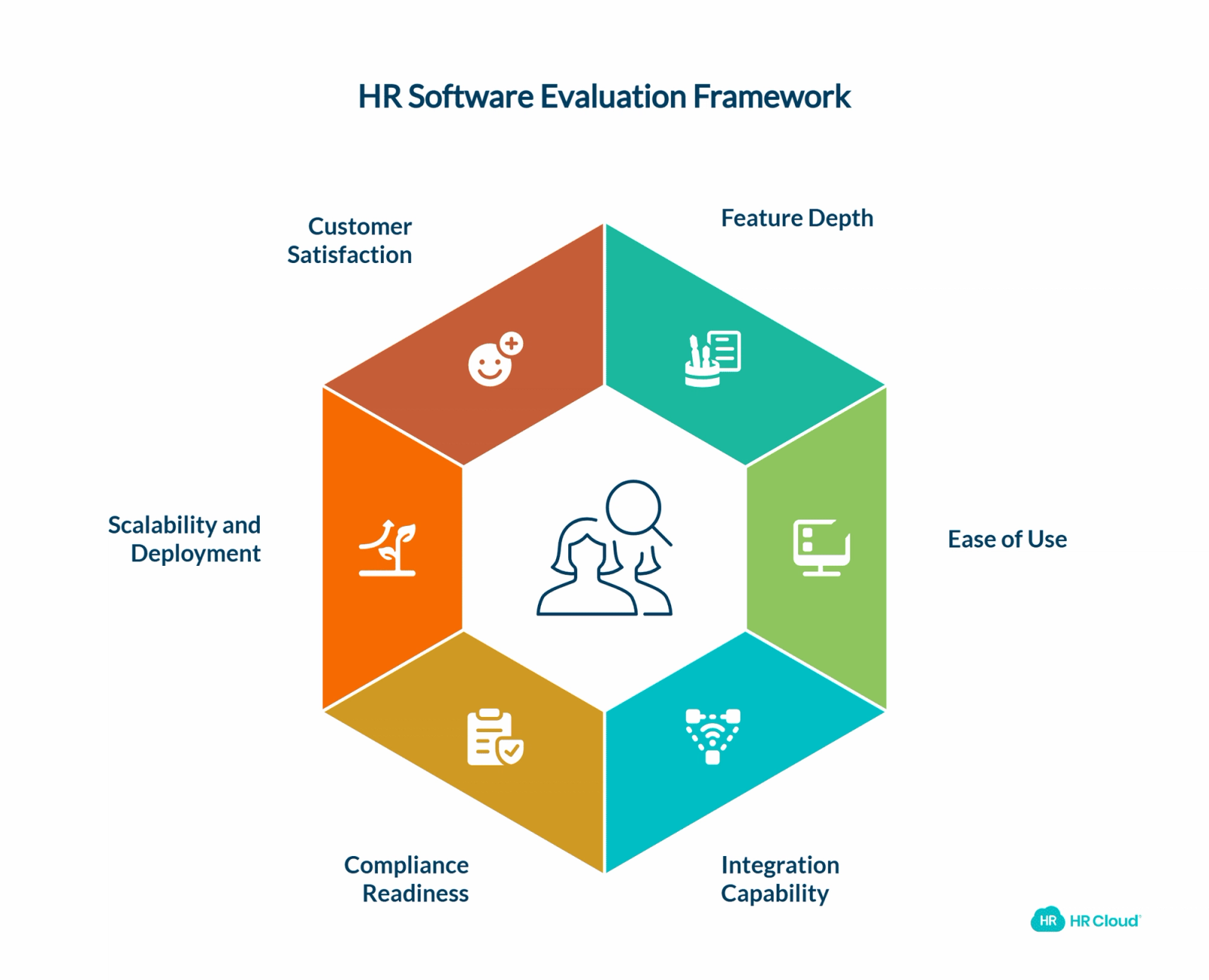
Before diving into specific platforms, let's establish our evaluation framework. We analyzed dozens of cloud hr systems using six critical criteria that matter most to businesses in 2026.
Feature depth forms the foundation of our assessment. We examined whether platforms offer core HRIS capabilities (employee database management, time-off tracking, basic reporting) or expand into comprehensive hr management system territory with automated onboarding workflows, performance management, and employee engagement software. The highest-rated solutions provide HCM platform-level functionality, including HR analytics and strategic workforce optimization planning features.
Ease of use can make or break adoption rates. The most feature-rich platform becomes worthless if your team won't use it. We evaluated interface design, setup complexity, and the learning curve for both administrators and end-users. Platforms that require extensive training or feel clunky in daily use received lower scores in this category.
Integration capability
increasingly determines long-term success. Modern businesses rely on interconnected software ecosystems. We prioritized cloud-based hr platforms that seamlessly connect with popular payroll management systems like ADP and Paychex, accounting software such as QuickBooks, and communication tools including Slack and Microsoft Teams.
Compliance readiness has become non-negotiable, especially for companies managing remote workforce compliance. We assessed each platform's ability to handle SOC 2 compliance, GDPR requirements, ACA reporting, and other regulatory demands. Solutions lacking robust compliance features simply can't compete in today's environment.
Scalability and deployment models determine whether a platform will grow with your organization. Cloud-based HR solutions dominated our rankings due to their flexibility, automatic updates, and mobile accessibility. We also considered how easily platforms accommodate rapid hiring, international expansion, and changing organizational structures.
Finally, customer satisfaction provides real-world validation. We analyzed thousands of reviews from G2, Capterra, and other trusted sources, focusing on implementation experiences, ongoing support quality, and user adoption rates across various HR software companies.
Based on these criteria, we've organized our top recommendations into four key categories: Small to Mid-Size Business solutions, Mid-Market platforms for scaling companies, Enterprise systems for large organizations, and specialized HR tools for Remote and Distributed Teams.
Top HR Software by Category: Platform-by-Platform Breakdown
SMB-Focused Solutions: Perfect for Growing Teams
HR Cloud takes a modular approach that appeals to growing SMBs looking for scalable cloud HR software solutions. Rather than forcing you into a one-size-fits-all solution, this HR Cloud platform lets you start with core HRIS features and add modules as your needs evolve.
The employee onboarding software module stands out as particularly strong, with customizable HR workflows that can handle complex multi-step processes. The Workmates employee recognition platform drives genuine employee engagement—something rare in this market segment. Time-off tracking includes sophisticated approval chains and policy management that typically require enterprise-grade platforms.
HR Cloud's strength lies in its ability to grow with your organization. You can start simple and gradually add performance management tools, advanced hr analytics and, employee engagement software features. The platform handles mid-size company complexity while maintaining SMB-friendly pricing and ease of use.
BambooHR has earned its reputation as the go-to choice for startups and small businesses seeking simplicity without sacrificing functionality. The platform excels at core HRIS features with an interface so intuitive that most users need zero training.
What sets BambooHR apart is its focus on user experience. Employee self-service feels natural, not clunky. Managers can approve time-off requests with a single click. The reporting dashboard provides essential workforce insights without overwhelming users with unnecessary complexity. Integration with popular small business tools like QuickBooks and various applicant tracking system platforms makes implementation smooth.
However, BambooHR's strength—simplicity—becomes a limitation as organizations grow. Advanced performance management features feel basic compared to specialized platforms. The employee engagement software tools are functional but not inspiring. Companies planning rapid expansion often outgrow BambooHR within 18-24 months.
Zoho People offers solid value for organizations already invested in the Zoho ecosystem. The platform provides essential HRIS functionality plus workflow automation that can handle moderately complex HR processes.
The standout feature is customization flexibility. You can configure approval workflows, create custom fields, and adapt the system to match your specific processes. For companies with unique HR requirements that don't fit standard templates, this flexibility proves invaluable. The mobile app works well for field-based teams and remote workers.
The downside? Zoho People feels dated compared to newer cloud-based hr system platforms. The interface lacks the polish of competitors, and some features require technical knowledge to implement effectively. Support quality varies significantly depending on your subscription tier.
Gusto built its reputation on payroll management excellence and expanded into HR territory with mixed results. For small businesses prioritizing payroll accuracy and tax compliance, Gusto remains unmatched. The benefits administration is surprisingly robust for a payroll-first platform.
Where Gusto struggles is true HR management system functionality. Performance management feels like an afterthought. Onboarding workflows are basic. Employee engagement software features are practically non-existent. If your primary need is bulletproof payroll with some HR conveniences, Gusto works well. If you want comprehensive HR management, look elsewhere.
Mid-Market Tools: Built for Scaling Organizations
HR Cloud deserves special attention in the mid-market category because it bridges the gap between simple HRIS tools and complex enterprise systems. The comprehensive cloud HR platform provides full functionality without enterprise-level complexity or cost.
The platform shines in three critical areas for growing companies. First, the onboarding experience rivals enterprise solutions with customizable HR workflows, document management, and automated task assignments. New hires can complete paperwork, access training materials, and connect with colleagues before their first day.
Second, the Workmates employee engagement software creates genuine community within distributed teams. Unlike generic recognition and rewards tools, Workmates encourages peer-to-peer employee recognition, social interaction, and knowledge sharing. Companies report measurably higher employee retention after implementing this module.
Third, HR Cloud's payroll integration capabilities solve the connection challenges that plague mid-size companies. Seamless connections with ADP, UKG, Paylocity, Slack, and dozens of other platforms eliminate data silos and reduce manual work.
Rippling represents the future of integrated HR and IT management. If your organization struggles with the complexity of managing multiple systems for HR, IT, and device management, Rippling's unified approach can be transformative.
The automation capabilities are genuinely impressive. New hire workflows can automatically provision email accounts, assign appropriate software licenses, order laptop equipment, and enroll employees in benefits—all triggered by a single hire action in the system. For rapidly scaling teams, this level of automation prevents the administrative chaos that typically accompanies growth.
However, Rippling's integrated approach can feel overwhelming for organizations with straightforward HR needs. The platform works best when you can leverage multiple modules. If you only need basic HRIS functionality, simpler cloud HR solutions provide better value.
Namely focuses specifically on mid-market organizations with 75-1000 employees. The platform excels at benefits administration and compliance management—two areas where growing companies often struggle.
The benefits platform handles complex scenarios like multiple plan options, varying eligibility requirements, and compliance tracking across different states. The annual enrollment process is smooth for both administrators and employees. Integration with major insurance carriers eliminates manual data entry and reduces errors.
Namely's weakness lies in performance management and employee engagement software features. The HR tools are functional but lack the sophistication of specialized platforms. Companies prioritizing culture and employee development often need supplementary solutions.
Factorial HR brings European design sensibilities to HR software with flexible HR workflows and strong talent engagement features. The platform handles complex approval processes, custom reporting, and multi-location management particularly well.
What sets Factorial apart is its focus on employee experience. The mobile app feels consumer-grade rather than corporate software. Time tracking, expense management, and communication tools work seamlessly across devices. The employee surveys and pulse check features provide actionable insights into team satisfaction employee and retention risks.
The challenge with Factorial is limited integration options compared to established platforms. While core integrations exist, connecting with specialized business tools often requires custom development or workarounds.
Enterprise HR Systems: Comprehensive Solutions for Large Organizations
Workday is widely recognized as the benchmark for enterprise HCM platform solutions, offering extensive HR software applications to address the most complex organizational requirements. It is particularly suited for global companies managing diverse compliance obligations, intricate reporting needs, and advanced workforce management planning.
Its scenario modeling tools can predict turnover, identify skill gaps, and optimize organizational structures, while executive dashboards deliver real-time HR analytics for strategic decision-making.
However, Workday’s depth comes with significant complexity. Implementations often span 6–18 months, require dedicated teams, and involve a steep learning curve. Without effective change management, user adoption can be challenging, making it less suitable for small or mid-sized organizations.
SAP SuccessFactors excels in environments that demand tight integration with existing SAP ecosystems. Its enterprise-grade compliance capabilities and global reach make it a strong choice for large, multinational operations.
The platform’s performance management suite—featuring goal alignment, 360-degree employee feedback, succession planning, and development tracking—addresses the nuanced needs of large enterprises.
Its drawbacks include complex configuration requirements and an interface that feels dated relative to modern cloud-native platforms. Organizations without prior SAP infrastructure may prefer more user-friendly cloud-based HR solutions.
Oracle HCM Cloud is designed for organizations with complex HR demands that require advanced workforce optimization and automation. It handles global compliance, detailed reporting, and integrates seamlessly with Oracle’s broader enterprise applications.
Its strength lies in robust employee data management and predictive HR analytics, which help HR leaders uncover patterns, anticipate trends, and drive data-informed decisions.
The platform’s technical demands, however, necessitate specialized expertise for both implementation and ongoing management, and its user interface lags behind newer SaaS competitors.
ADP Workforce Now has expanded beyond its payroll roots into a full HR platform. It is particularly effective for distributed, global workforces where payroll accuracy and regulatory compliance are paramount, and its workflows cover core HR functions like onboarding, benefits enrollment, and time tracking. Many ADP Workforce Now customers add HR Cloud on top for the employee-facing layer: employees sign in with their ADP credentials, new-hire data flows from ADP into HR Cloud automatically, and completed forms download to ADP Document Cloud in one click. See how the ADP Workforce Now integration works.
Addressing Onboarding and Engagement Gaps with HR Cloud Solutions
While enterprise HCM platform systems deliver powerful payroll management, compliance, and reporting capabilities, many large organizations face persistent challenges with onboarding and employee engagement software. Traditional systems are optimized for structural HR functions but often lack the agility and user experience needed to drive high-quality, personalized new hire journeys or sustained employee retention—particularly when navigating the complex workflows of multinational operations, each with its own local compliance requirements.
Modern cloud HR solutions bridge this gap by complementing platforms like Workday, SAP SuccessFactors, Oracle HCM, and ADP through:
- Automated, End-to-End Workflows: Streamlining administrative tasks such as approvals, compliance tracking, and document management, reducing manual effort and freeing HR teams to focus on strategic priorities.
- Enhanced Onboarding: Delivering guided, digital onboarding journeys that integrate with enterprise HCM data while automating provisioning, task assignments, and compliance checks to accelerate new hire readiness.
- Continuous Engagement Tools: Offering employee surveys, employee recognition programs, and employee feedback mechanisms that traditional enterprise platforms often lack, helping improve employee retention and morale.
- Seamless Integration with Core Systems: APIs and pre-built connectors allow these cloud-based hr solutions to sync effortlessly with Workday, SAP, Oracle, and ADP, ensuring workforce data consistency while enhancing functionality.
- Improved User Experience: Providing intuitive, mobile-first interfaces layered over complex enterprise systems, boosting adoption and usability for both HR teams and employees throughout the employee lifecycle.
By complementing enterprise HCM platform systems rather than replacing them, HR cloud software platforms enable large organizations to close critical onboarding talent and engagement gaps without disrupting existing infrastructure.
Remote and Global Teams: Specialized Solutions for Distributed Work
HR Cloud adapts well to remote and distributed teams with mobile-first cloud HR software access, comprehensive onboarding capabilities, and the Workmates employee recognition platform that builds culture across distances. The platform's modular approach allows remote-first organizations to implement relevant features without paying for unused functionality. The time tracking and PTO management system works seamlessly for distributed teams across multiple time zones.
Deel has become the standard for companies managing global teams and contractors. The platform handles employment compliance across 100+ countries, contractor payments, and global benefits administration.
For companies hiring internationally, Deel eliminates the complexity of understanding local employment laws, tax requirements, and payment methods. The platform acts as an Employer of Record (EOR) in many countries, allowing you to hire employees without establishing local entities.
The limitation is traditional HR management system functionality. While Deel excels at compliance and payments, it lacks comprehensive HRMS features like performance management, onboarding workflows, and employee engagement software tools.
Remote.com provides EOR services with more traditional HR management capabilities than Deel. The platform combines global employment services with HRIS functionality suitable for distributed teams.
The onboarding process handles both compliance and cultural integration effectively. New hires can complete legal requirements while accessing company resources, meeting team members, and understanding company culture. This dual focus addresses the unique challenges of remote talent acquisition.
Remote.com's weakness is limited customization compared to traditional cloud-based HR platform solutions. Organizations with complex HR processes may need supplementary HR tools.
HiBob (Bob) specializes in culture and employee engagement software for distributed organizations. The platform recognizes that remote and hybrid teams need different engagement strategies than traditional office-based organizations.
The social features encourage connection and collaboration across time zones. Employee surveys provide insights into remote team dynamics. The performance management tools account for the unique challenges of managing distributed teams.
However, HiBob lacks comprehensive payroll integration and compliance features. Organizations need separate solutions for these critical functions.
Platform Comparison Matrix
| Platform | SMB Fit | Mid-Market Fit | Enterprise Fit | Onboarding | Engagement | Payroll | Integration | Notable Strength |
|---|---|---|---|---|---|---|---|---|
| HR Cloud | ✅ | ✅ | ✅ | ✅ | ✅ (Workmates) | Via ADP, UKG or Paylocity integration | ADP, UKG, Paylocity, Slack | Modular, easy to adopt |
| BambooHR | ✅ | ⚠️ | ❌ | ✅ | ⚠️ | ⚠️ | QuickBooks, ATS | Simplicity |
| Workday | ❌ | ✅ | ✅ | ✅ | ✅ | ✅ | Full suite | Enterprise analytics |
| Rippling | ✅ | ✅ | ⚠️ | ✅ | ✅ | ✅ | IT + HR stack | Automation |
| HiBob | ⚠️ | ✅ | ✅ | ✅ | ✅ | ❌ | Slack, G Suite | Culture focus |
| Deel | ⚠️ | ✅ | ✅ | ⚠️ | ❌ | ✅ | Global compliance | Remote-first |
| Gusto | ✅ | ⚠️ | ❌ | ⚠️ | ❌ | ✅ | QuickBooks | Payroll accuracy |
| Namely | ⚠️ | ✅ | ⚠️ | ✅ | ⚠️ | ✅ | Benefits carriers | Benefits admin |
Legend:
- ✅ Excellent fit / Full functionality
- ⚠️ Limited fit / Basic functionality
- ❌ Poor fit / Missing functionality
This matrix provides a quick reference for evaluating platforms based on your organization's size and priorities. Remember that "fit" depends not just on HR software features but also on budget, implementation timeline, and internal technical capabilities.
Feature Checklist: What to Look For in 2026
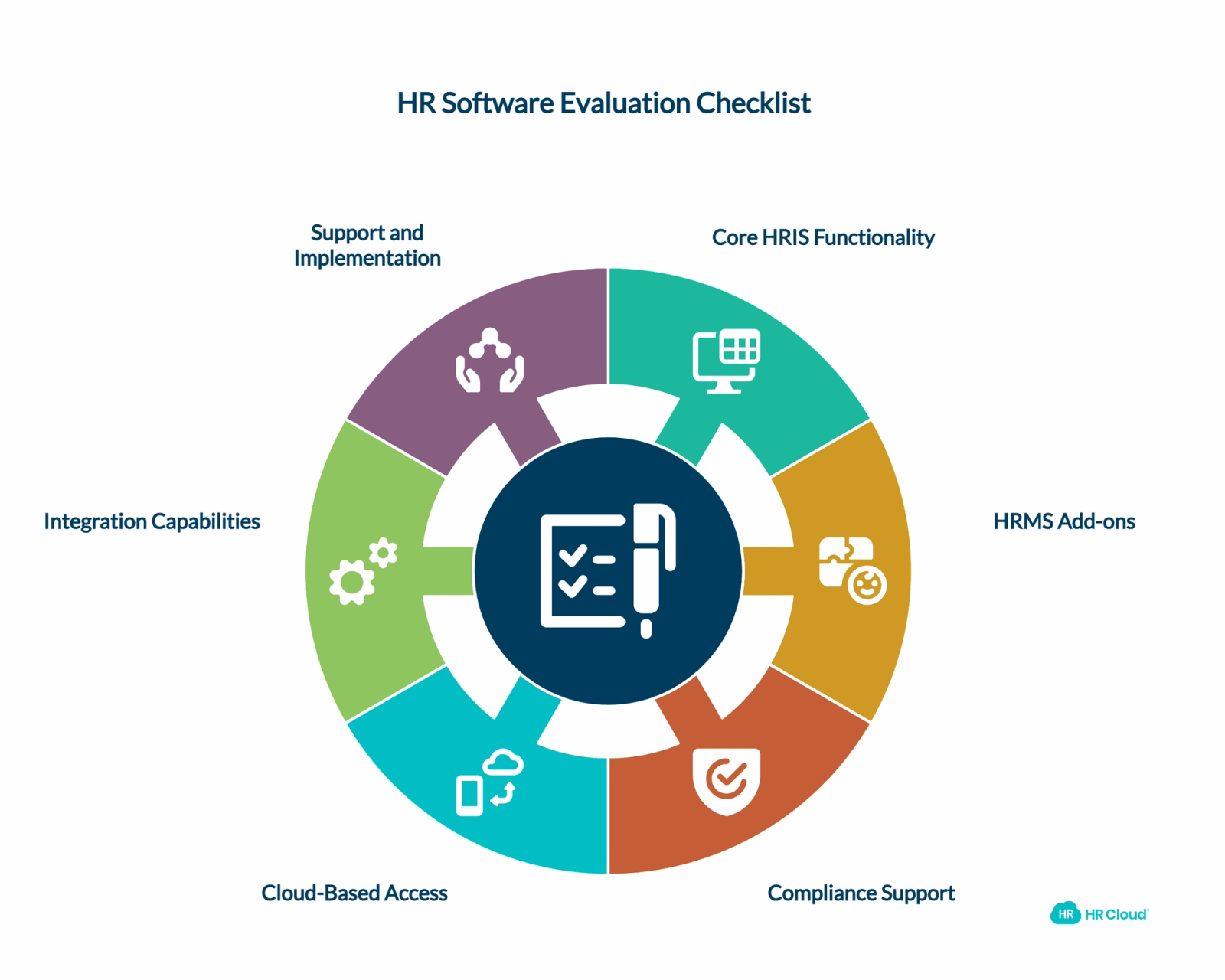
The HR software landscape continues evolving rapidly. Features that seemed advanced just two years ago are now table stakes. Here's your essential checklist for evaluating cloud HR systems in 2026.
Core HRIS functionality remains the foundation. Employee database management, time-off tracking, basic reporting, and document storage are non-negotiable. However, modern HR software platforms should handle these features with minimal administrative overhead. Look for solutions that automate routine tasks like time-off approvals, birthday notifications, and policy acknowledgments.
HRMS add-ons differentiate good platforms from great ones. Comprehensive employee onboarding software can transform new hire experiences from paperwork marathons into engaging introductions to company culture. Performance management systems should support continuous employee feedback, goal setting, and development planning—not just annual reviews. Employee engagement software must go beyond basic employee surveys to create genuine community and employee recognition.
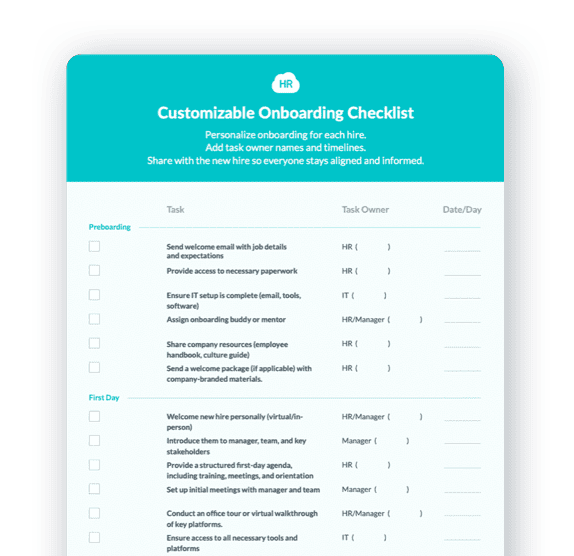
Download your free employee onboarding checklist Using this checklist ensures that you are not scrambling to make the new employees feel welcomed, prepared, and set up for long-term success. Download Now
Compliance support has become critically important as regulations multiply and penalties increase. SOC 2 compliance ensures data security. GDPR compliance is essential for any organization with European employees or customers. ACA reporting automates healthcare compliance requirements. State-specific compliance features handle varying employment laws across jurisdictions.
Cloud-based access and mobile UX are no longer optional. Employees expect to manage HR tasks from their phones. Managers need mobile approval capabilities. The mobile experience should feel native, not like a poorly adapted web interface. Offline functionality helps field-based and traveling employees stay connected.
Integration capabilities can make or break your HR tech stack. Seamless connections with payroll management systems like ADP, Paychex, and Gusto eliminate duplicate data entry and reduce errors. Accounting software integration ensures accurate reporting and budgeting. Communication tool connections with Slack, Microsoft Teams, and email platforms keep HR activities visible in daily workflows Applicant tracking system integration streamlines talent acquisition processes..
Support and implementation services often determine success or failure. Look for HR software companies offering dedicated implementation managers, comprehensive training resources, and responsive ongoing HR service delivery. The best HR solution becomes worthless if you can't implement it effectively or get help when problems arise.
Advanced hr software features worth considering include automation workflows for streamlining processes, AI-powered HR analytics for predicting turnover and identifying high performers, and workforce management automation that reduces manual administrative tasks. However, don't let feature lists distract from core functionality and ease of use.
Real-World Case Study: Mid-Size Company Chooses HR Cloud
TechForward Solutions faced a classic mid-size company dilemma. With 180 employees across three locations, their combination of spreadsheets, email workflows, and basic payroll software was breaking down. New hire onboarding took weeks, performance reviews happened sporadically, and employee engagement was declining as the company grew rapidly.
The leadership team initially considered enterprise HCM platform solutions like Workday but balked at the 12-month implementation timeline and six-figure annual costs. Basic HRIS platforms like BambooHR seemed too simple for their complex approval workflows and multi-location employee management needs.
HR Cloud's modular HR Cloud software approach provided the perfect middle ground. The implementation team started with core HRIS functionality and automated onboarding workflows. Within six weeks, new employees were completing digital paperwork before their start date and following structured onboarding paths that included training modules, introductions to team members, and clear 90-day goals.
Three months later, they added the Workmates employee engagement software platform. Employee satisfaction scores increased 23% within the first quarter as team members began recognizing achievements, sharing knowledge, and building connections across locations. The employee recognition features created positive momentum that traditional employee surveys had never achieved.
The modular rollout approach allowed TechForward to spread costs over time while achieving quick wins that built organizational buy-in. Twelve months post-implementation, they've reduced administrative HR tasks by 40%, improved new hire employee retention by 15%, and created a foundation for continued growth without adding HR staff.
How to Choose the Right Platform for Your Organization
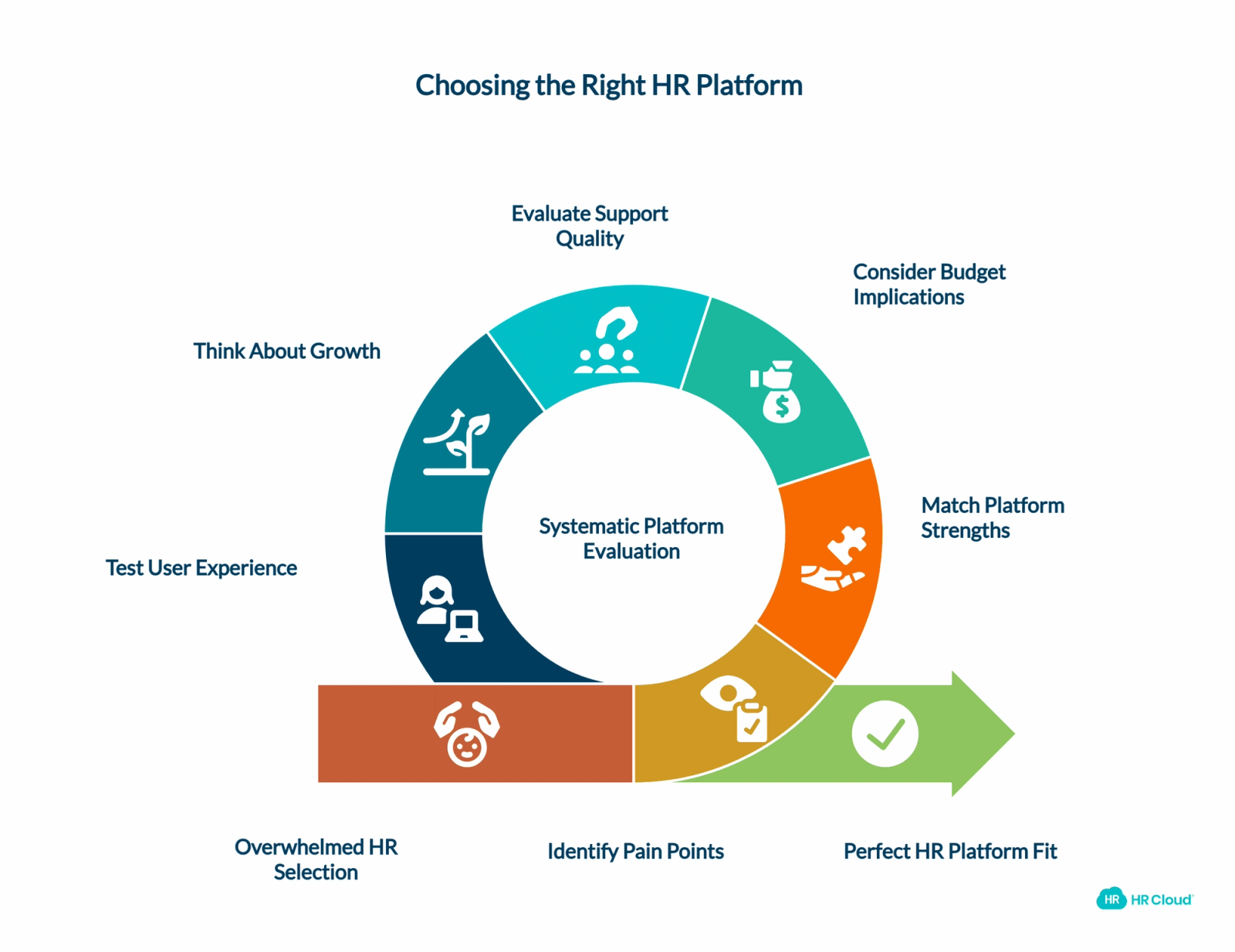
Selecting the ideal HR software feels overwhelming because the stakes are high and the options seem endless. However, a systematic approach can simplify the decision and increase your chances of long-term success.
Start by identifying your current HR pain points. Don't focus on HR software features you might need someday. Instead, list the problems causing immediate frustration. Are manual time-off approvals creating bottlenecks? Is poor employee onboarding contributing to early turnover? Are managers avoiding performance conversations because the process is too cumbersome? Do HR compliance requirements consume too much administrative time?
Match platform strengths to your specific gaps. If onboarding is your primary concern, prioritize cloud-based HR platforms with sophisticated workflow capabilities over those with advanced analytics. If employee engagement software is suffering, focus on solutions with proven employee recognition and communication features. If compliance keeps you awake at night, invest in platforms with robust regulatory support rather than basic HRIS tools.
Consider budget implications carefully. HRIS platforms typically cost $5-15 per employee per month. Cloud HR solutions with comprehensive features range from $15-30 per employee monthly. Full HCM platform suites start at $30+ per employee and can exceed $100 for enterprise-grade platforms. Remember to factor in implementation costs, training time, and potential integration fees. A higher monthly cost often provides better value if it eliminates the need for multiple point solutions.
Evaluate support and onboarding quality. The most feature-rich platform becomes worthless if you can't implement it successfully. Look for HR software companies offering dedicated implementation managers, comprehensive training programs, and responsive ongoing HR service delivery. Ask about average implementation timelines and user adoption rates. Request references from similar-sized organizations in your industry.
Think about growth trajectory. If you're planning significant hiring, international expansion, or organizational changes, choose cloud-based HR system platforms that can scale with your needs. Switching HR systems is expensive and disruptive. It's often better to invest in slightly more capability than you currently need rather than outgrow your platform within two years.
Test the user experience thoroughly. HR software features matter less than adoption. Request extended trial periods that allow your team to test real HR workflows, not just demo scenarios. Pay attention to how employees react during trials. If your team struggles with basic tasks during testing, they'll abandon the system after implementation.
The best HR solution should feel like it was designed for organizations exactly like yours. If you find yourself constantly working around limitations or wishing for different features during the trial period, keep looking. The perfect fit exists—it just requires patience and systematic evaluation
.
Ready to Transform Your HR Operations?
Choosing the right cloud hr platform can revolutionize how your organization manages its most valuable asset: your people. Whether you're a growing startup needing better onboarding processes, a mid-size company struggling with employee engagement software, or an enterprise seeking comprehensive workforce insights, the best hr cloud solution exists for your specific needs.
The platforms highlighted in this hr software comparison represent the best hr systems available in 2026, each excelling in different areas and serving different organizational profiles. Remember that the "best" platform isn't necessarily the one with the most hr software features—it's the one that solves your specific challenges while fitting your budget, timeline, and technical capabilities.
Don't let analysis paralysis prevent you from making progress. Start with your most pressing HR pain points, narrow your options to 2-3 cloud-based hr solutions that address those needs, and request comprehensive trials. Your future self will thank you for making the investment in proper modern hr software technology.
Ready to explore your options? Compare HR Cloud modules and pricing by company size on the HR Cloud pricing page.
Want to see HR Cloud in action? Schedule a personalized demo to explore how our modular cloud HR management platform can address your specific challenges. Our implementation specialists will show you real HR workflows, discuss integration options, and provide customized pricing based on your organization's needs. You can also explore our customer success stories to see how similar organizations have transformed their HR operations with this new hr system.
FAQ’s
1. What is the best HR platform?
The best HR platform is the one that matches your company size, workforce, and payroll setup. For small businesses under 50 employees, BambooHR and HR Cloud are the most common choices. For mid-market companies with 50 to 500 employees, HR Cloud, Rippling, and HiBob lead on onboarding and engagement. For large global enterprises, Workday, SAP SuccessFactors, and Oracle HCM handle complex compliance and reporting. HR Cloud is designed for frontline and distributed workforces, combining Onboard, Workmates, Perform, and Time Off in one modular platform. It does not replace payroll; it integrates with ADP Workforce Now, ADP RUN, UKG, and Paylocity so new-hire data flows without re-entry.
2. What is the best HR software for small businesses?
For small businesses under 50 employees, BambooHR and HR Cloud offer the best combination of functionality and ease of use. BambooHR excels in simplicity and quick implementation, making it ideal for organizations wanting basic HRIS functionality without complexity. HR Cloud provides more comprehensive HRMS features with a modular approach that allows small businesses to start simple and add capabilities as they grow. Both platforms offer affordable HR software pricing and user-friendly interfaces that don't require extensive training.
3. Which HR system is best for remote teams?
Remote and distributed teams have unique needs that traditional HR software often overlooks. HR Cloud's mobile-first design and Workmates engagement platform work exceptionally well for distributed organizations. HiBob specializes in remote team culture and engagement with features designed specifically for distributed workforces. For companies managing global contractors and international employees, Deel provides unmatched compliance and payment capabilities, though it lacks comprehensive HRMS features.
4. Is HR Cloud suitable for mid-size companies?
HR Cloud is particularly well-suited for mid-size companies between 50-500 employees. The platform's modular approach allows organizations to implement core HRIS features quickly, then add performance management, engagement tools, and advanced reporting as needs evolve. The onboarding workflows can handle complex multi-step processes, while the integration capabilities connect seamlessly with existing payroll and business systems. Mid-size companies appreciate the balance between comprehensive functionality and user-friendly design.
5. How does HR Cloud compare to BambooHR or Rippling?
Each platform serves different organizational needs. BambooHR prioritizes simplicity and ease of use, making it ideal for small businesses wanting basic HRIS functionality without complexity. However, it lacks advanced features needed by growing organizations. Rippling offers impressive automation and IT integration capabilities, but it can feel overwhelming for companies with straightforward HR needs. HR Cloud strikes a middle ground with comprehensive HRMS features presented in a user-friendly interface, plus the flexibility to grow with your organization through its modular approach.
6. Can I integrate HR Cloud with my payroll system?
Yes, HR Cloud offers seamless integrations with major payroll providers, including ADP, UKG, Paylocity, Paycor, and others. These integrations eliminate duplicate data entry, ensure accuracy across systems, and streamline payroll processing. The platform also connects with popular accounting software like QuickBooks, communication tools such as Slack and Microsoft Teams, and various ATS platforms. The integration capabilities are designed to fit into existing business workflows rather than requiring wholesale system changes.
About the author

Keep Reading


Like What You Hear?
We’d love to chat with you more about how HR Cloud® can support your business’s HR needs.
Book Your Free Demo